NAGISING AKO SA CLINIC MATAPOS MAHIMATAY AT NARINIG ANG SEKRETARYA NA BUMULONG, “SIGURADO KA BANG NALUNOK NIYA?” NGUMISI ANG ASAWA KO, “KALMA LANG! BUKAS, SA ATIN NA ANG LAHAT NG YAMAN!” SA MISMONG SANDALING IYON, NAG-TEXT AKO SA AKING ABOGADO: “SIMULAN NA ANG PLANO!”
Sinasabi nila na ang pinakamalalim na sugat ay hindi nagmumula sa iyong mga kaaway, kundi sa mga taong pinagkakatiwalaan mo at kasama mong natutulog sa iisang kama. Sa loob ng limang taon, inakala kong nasa akin na ang lahat—isang matagumpay na imperyo ng negosyo at isang mapagmahal na asawa na si Marcus.
Ngunit ang hindi ko alam, ang lalaking pinangakuan ko ng walang hanggang pag-ibig ay ang mismong ahas na unti-unting lumalason sa aking buhay.
Ako si Valeria. Ako ang nag-iisang tagapagmana at CEO ng Vanguard Enterprises. At ito ang kwento kung paano ko binaliktad ang kamatayan upang ilibing nang buhay ang mga taong nagtangkang nakawin ang aking mundo.
ANG MGA BULONG SA LOOB NG CLINIC
Lahat ay nangyari noong Huwebes ng hapon. Nasa kalagitnaan ako ng isang board meeting nang bigla akong makaramdam ng matinding hilo. Nanikip ang aking dibdib, nanlabo ang aking paningin, at bago ko pa man maitukod ang aking mga kamay sa mesa, tuluyan na akong nawalan ng malay.
Nang magising ako, naramdaman ko ang malamig na hangin ng aircon at ang amoy ng alkohol. Nasa loob ako ng company clinic. Nakapikit pa rin ang aking mga mata at mabigat ang aking katawan. Akmang mumulat na sana ako upang humingi ng tubig nang bigla akong makarinig ng mga pamilyar na boses mula sa kabilang gilid ng kurtina.
“Sigurado ka bang nalunok niya?” boses iyon ni Clara, ang pinagkakatiwalaan kong sekretarya. Nanginginig ang tono niya ngunit may halong pananabik.
Narinig ko ang pamilyar na halakhak ng aking asawang si Marcus. Isang malamig at nakakakilabot na tawa na kailanman ay hindi niya ipinakita sa akin.
“Kalma ka lang, Clara,” mayabang at kumpidenteng sagot ni Marcus. “Nakita ko mismo kung paano niya ininom ang kapeng tinimpla mo. Kumpleto na ang dosage. Bukas ng umaga, aatakehin siya sa puso at idedeklarang natural death. Walang makakapansin sa lason. At bukas din… lahat ng yaman niya, ang buong kumpanya, ay mapapasaya na nating dalawa.”
Naramdaman ko ang paglamig ng buong katawan ko. Tila huminto ang pagtibok ng aking puso. Ang asawa kong pinakamamahal, at ang sekretaryang itinuring kong kapatid… magkakasabwat upang patayin ako at angkinin ang pinaghirapan ko!
Narinig ko ang halikang naganap sa pagitan nila. “Hindi na ako makapaghintay, Marcus. Sawang-sawa na akong maging utusan ng babaeng ‘yan,” bulong ni Clara.
Lumabas sila ng clinic saglit upang kausapin ang doktor at siguraduhing “naaalagaan” ako nang mabuti.
Nang sumara ang pinto, dahan-dahan kong iminulat ang aking mga mata. Walang luhang tumulo. Naubos na ang emosyon ko, at napalitan ito ng isang nag-aapoy na poot. Inakala nilang napagtagumpayan na nila ang plano, ngunit hindi nila alam na isang buwan ko na silang binabantayan.
Napansin ko na ang kakaibang lasa ng kape ko nitong mga nakaraang linggo, kaya’t palihim ko itong ipinasuri sa isang toxicologist. Nalaman kong nilalagyan nila ako ng slow-acting undetectable poison. Ang ginawa ko? Araw-araw kong itinatapon ang kape at nagpapanggap na iniinom ito. Ang pagkahimatay ko kanina? Isa lamang itong perpektong pag-arte upang paniwalain silang gumagana ang kanilang plano.
Kinuha ko ang aking smartwatch na nakakonekta sa aking telepono. Mabilis na nag-type ang nanginginig kong mga daliri at ipinadala ang isang mensahe sa aking corporate lawyer at matalik na kaibigan na si Atty. Mendoza:
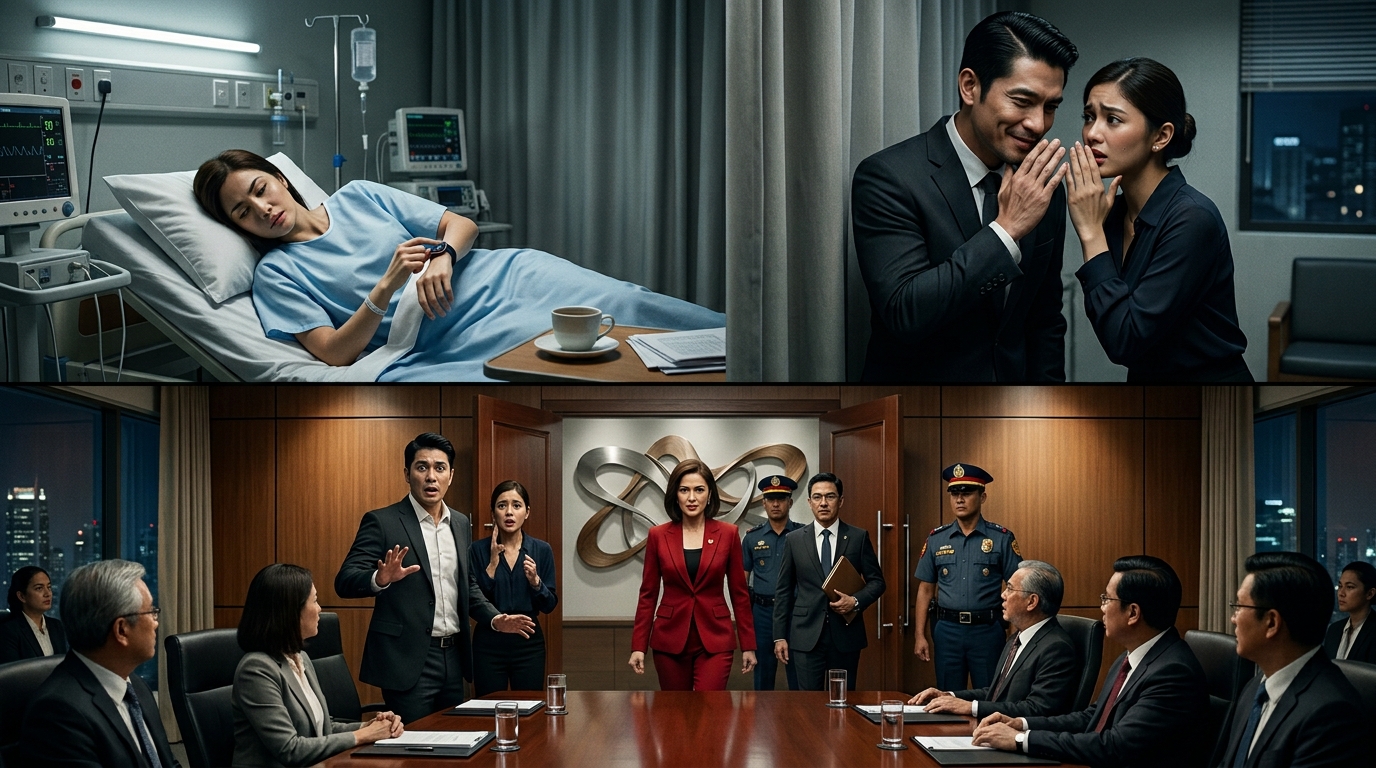
“Nasa clinic ako. Umamin na sila. Simulan na ang plano ngayon din.”
ANG UMAGA NG KANILANG TAGUMPAY
Kinabukasan, naiuwi ako sa aming mansyon upang “magpahinga.” Ayon sa plano ni Marcus, iyon na ang huling gabi ko sa mundo. Palihim akong uminom ng antidote at nagpanggap na natutulog nang mahimbing habang tahimik na nag-iimpake ng kanyang mga gamit si Marcus sa kabilang kwarto.
Alas-otso ng umaga. Nagpatawag ng isang Emergency Board Meeting si Marcus sa kumpanya. Inaasahan niya na anumang oras ay makakatanggap siya ng tawag mula sa mansyon na patay na ako sa aking kama.
Sa loob ng malaking conference room, nakaupo si Marcus sa kabisera ng mesa—ang aking silya. Nakatayo sa tabi niya si Clara na may ngiting tagumpay.
“Mga kasama sa Board,” madramang panimula ni Marcus, pilit na pinapalungkot ang kanyang boses. “Kagabi pa kritikal ang asawa kong si Valeria. Sa kasamaang palad, baka hindi na siya magtagal. Bilang kanyang asawa at legal na tagapagmana, ako na ang pansamantalang kukuha ng buong kontrol sa Vanguard Enterprises—”
BLAG!
Bumukas nang napakalakas ang malalaking pintuan ng conference room.
Napatigil ang lahat ng Board of Directors. Nalaglag ang panga ni Marcus at nanlaki ang mga mata ni Clara na tila nakakita ng multo.
Naglakad ako papasok, suot ang aking paboritong red power suit, suot ang matalim na ngiti, at puno ng buhay. Kasunod ko si Atty. Mendoza at apat na matitipunong pulis mula sa Criminal Investigation Group.
ANG WAKAS NG MGA DEMONYO
“V-Valeria…?” nanginginig na usal ni Marcus, umatras at halos matumba sa kanyang inuupuan. “A-Anong ginagawa mo rito? D-Diba masama ang pakiramdam mo?”
Naglakad ako palapit sa kanya, ang tunog ng aking sapatos ay tila kampana ng kanyang katapusan.
“Bakit, Marcus? Nabigo ba ang lason na itinimpla ninyo sa kape ko kahapon?” malamig kong tanong na umalingawngaw sa buong tahimik na silid.
Naging kasing-puti ng papel ang mukha ni Clara. “M-Ma’am, wala po kaming alam sa sinasabi ninyo!”
Sumenyas ako kay Atty. Mendoza. Inilapag ng abogado ko ang isang makapal na folder sa ibabaw ng mesa.
“Narito ang kumpletong lab results mula sa toxicologist, na nagpapatunay na ang kape na hinahanda ni Clara araw-araw ay may lason,” anunsyo ni Atty. Mendoza. Kinuha niya ang isang maliit na recorder at pinatugtog ang audio na nakuha ko mula sa hidden microphone na inilagay ko sa clinic kahapon.
Rinig na rinig sa buong kwarto ang boses ni Clara: “Sigurado ka bang nalunok niya?” at ang sagot ni Marcus: “Bukas, sa atin na ang lahat ng yaman niya.”
Nagkagulo ang mga Board of Directors. Bumigay ang mga tuhod ni Clara at napaluhod siya sa sahig, umiiyak at nagmamakaawa. “Ma’am! Patawarin niyo ako! Inutusan lang ako ni Sir Marcus! Siya ang bumili ng lason!”
Nagwala si Marcus. Sinubukan niyang tumakbo palabas, ngunit mabilis siyang hinawakan at pinosasan ng mga pulis.
“Valeria! Asawa mo ako! Pakinggan mo muna ako, nadala lang ako ng tukso!” humahagulgol na pakiusap niya habang pilit na nagpupumiglas mula sa pagkakahawak ng mga awtoridad.
Lumapit ako sa kanya, tinitigan siya mula ulo hanggang paa nang may purong pandidiri.
“Sabi mo kahapon, kalma lang. Ngayon, ikaw ang kumalma, Marcus,” malamig kong bulong sa kanya. “Dahil simula bukas, sa akin na ang buong kumpanya, at sa inyo na ang malamig na rehas ng kulungan habambuhay.”
Tinalikuran ko sila habang kinakaladkad silang dalawa palabas ng conference room. Rinig sa buong palapag ang kanilang mga sigaw at pagsisisi. Inakala nilang kaya nilang patayin ang reyna upang makuha ang trono. Ngunit hindi nila alam, sa oras na isinara nila ang kurtina ng clinic, sila na mismo ang naghukay sa sarili nilang libingan.