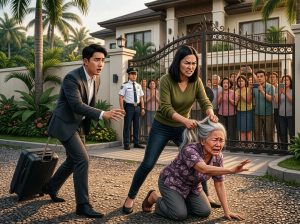
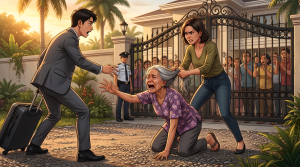
Maaga akong nakabalik mula sa isang biyahe sa negosyo, at laking gulat ko nang masaksihan ko ang walang-awang pagkaladkad ng katulong sa aking matandang ina palabas ng bahay na parang pulubi. Ikinagalit ko ang tanawin.
Hindi ko inaasahan na ang pagbabalik ko mula sa isang mahabang biyahe sa negosyo ang magiging simula ng pinakamadilim na araw ng buhay ko.
Ako si Miguel Reyes, 34 taong gulang, nagtatrabaho bilang regional sales manager. Dalawang araw akong nawala sa Maynila para sa isang mahalagang deal sa Cebu. Pagod ako, kulang sa tulog, pero masaya dahil matagumpay ang biyahe.
Ang iniisip ko lang noon: makauwi, makapagpahinga, at makita ang aking ina.
Si Mama, si Aling Rosa, 67 taong gulang. Simula nang mamatay si Papa, kami na lang dalawa ang magkasama sa bahay. Siya ang dahilan kung bakit nagsisikap ako sa buhay.
May katulong kami sa bahay—si Liza. Tahimik siya, magalang, at ilang buwan pa lang nagtatrabaho sa amin. Wala akong reklamo sa kanya. Sa katunayan, pinagkakatiwalaan ko siya dahil mukhang maayos naman ang trabaho niya.
Ngunit lahat ng iyon… nagbago sa isang iglap.
Pagdating ko sa subdivision, napansin kong bukas ang gate.
“Bakit bukas?” bulong ko sa sarili ko.
Walang guard sa labas. Tahimik ang buong paligid.
Pagpasok ko sa bakuran, may narinig akong ingay.
Sigawan.
“Bitawan n’yo ako!”
Napakunot ang noo ko.
Tinig iyon ni Mama.
Tumakbo ako papunta sa pinto.
At pagpasok ko sa loob…
Natigilan ako.
Para akong binuhusan ng malamig na tubig.
Nakita ko si Liza.
Hawak-hawak ang braso ng nanay ko.
Hinahatak palabas ng bahay.
“Ma! Ano’ng ginagawa mo?!” sigaw ko.
Huminto silang pareho.
Pagtingin ko sa eksena, para bang bumagal ang mundo.
Si Mama—nakayapak, gusot ang buhok, mukhang takot na takot.
Si Liza—hindi umiiyak, hindi nagmamakaawa. Kalmado.
Pero mahigpit ang hawak niya sa braso ng nanay ko.
Parang… pinipilit niyang iligtas ito.
“Bitawan mo ang nanay ko!” sigaw ko ulit, nanginginig ang boses ko sa galit.
Agad akong lumapit at hinawakan ang kamay ni Liza.
“Anong ginagawa mo?! Baliw ka ba?!”
Binitawan niya si Mama.
Napaupo ang nanay ko sa sahig, hingal na hingal.
“Miguel…” mahina niyang tawag sa akin.
Agad ko siyang nilapitan.
“Ma, okay ka lang?! Anong nangyari?!”
Ngunit bago pa siya makasagot, nagsalita si Liza.
“Sir Miguel, kailangan n’yo pong lumabas ng bahay ngayon din.”
Napatingin ako sa kanya, gulat na gulat.
“Ano?!”
“May amoy po ng gas sa loob. Malakas. Kanina ko pa po naaamoy.”
Natigilan ako.
Tumingin ako sa paligid.
Wala akong naaamoy.
“Sinisira mo ba’ko, Liza?!” sigaw ko. “Hinahatak mo ang nanay ko palabas ng sarili kong bahay tapos sasabihin mo may gas?!”
Umiling siya.
“Hindi po ako nagsisinungaling.”
Huminga siya nang malalim.
“Kanina pa po siya nahihilo, Sir. Sinubukan ko siyang palabasin pero ayaw niya.”
Napatingin ako kay Mama.
Nakaupo siya sa sahig, hawak ang dibdib.
“Ma, totoo ba ’to?” tanong ko.
Hindi siya sumagot agad.
Iwas siya ng tingin.
Doon ako kinabahan.
“Ma, sumagot ka!” medyo tumaas ang boses ko.
Dahan-dahan siyang tumingin sa akin.
“Miguel… huwag ka munang magalit.”
“Magalit?! Hinahatak ka palabas ng bahay natin!”
Biglang nagsalita si Liza.
“Sir, may oras po tayo. Kung magtatagal pa tayo dito, delikado po.”
Tumingin ako sa kanya nang masama.
“Ikaw ang delikado dito!”
Natigilan siya.
Hindi siya sumagot.
Ngunit hindi siya umaatras.
Kalmado pa rin siya.
Parang may alam siyang hindi ko alam.
Kinuha ko ang braso ni Mama.
“Ma, tara na sa labas.”
Ngunit hinawakan niya ang kamay ko.
“Miguel… huwag mo muna akong ilabas.”
Napakunot ang noo ko.
“Bakit?!”
Tahimik siya.
Tumingin siya kay Liza.
Parang may pag-aalinlangan.
Parang… takot.
Doon ako mas lalong kinabahan.
Biglang nagsalita si Liza muli.
“Sir Miguel… kung ayaw n’yong maniwala sa akin, tawagan n’yo po ang barangay o bumbero. Pero huwag po kayong magtagal dito.”
Huminga ako nang malalim.
“Anong kalokohan ito…”
Ngunit bago ko pa maabot ang cellphone ko…
Isang mahina ngunit malinaw na tunog ang narinig ko mula sa kusina.
Tssssss…
Parang gas stove na bukas.
Natigilan ako.
Tumingin si Liza sa akin.
“Narinig n’yo po ba ’yon?”
Hindi ako sumagot.
Dahan-dahan kong nilingon ang kusina.
Tumindi ang kaba ko.
“Ma…” bulong ko.
Tumayo si Mama.
“Miguel… hindi dapat ganito…”
“Ano bang hindi dapat?!”
Ngunit hindi niya ako matingnan.
At doon ko napansin ang kamay niya.
Nanginginig.
Parang may itinatago siyang matagal na.
Biglang nagsalita si Liza nang mas mariin.
“Sir Miguel, kailangan n’yo na pong lumabas ngayon. Ngayon na.”
Hindi na ito normal.
Hindi na ito simpleng argumento.
May mali.
May mali talaga.
Kinuha ko si Mama at inalalayan patungo sa pinto.
Ngunit bago pa kami makalabas…
BOOM.
Isang malakas na tunog mula sa loob ng kusina.
Amoy na hindi ko maipaliwanag ang biglang kumalat.
Nanlamig ang buong katawan ko.
Tumingin ako kay Liza.
At sa unang pagkakataon…
Nakita ko siyang natakot.
“Sir Miguel…” bulong niya.
“Late na po tayo.”
At sa sandaling iyon…
Nakita ko ang nanay ko na umiiyak habang may binubulong na hindi ko pa rin maintindihan—
isang katotohanang magbabago sa lahat ng paniniwala ko tungkol sa kanya.
Nakatayo kami sa labas ng bahay habang unti-unting lumalakas ang amoy na galing sa loob.
May mga dumating na kapitbahay. May tumawag na rin ng barangay. May isang tao ring tumawag ng bumbero.
Pero sa isip ko, parang wala akong naririnig.
Ang nasa harap ko lang ay si Mama—umiiyak, nanginginig, hawak ang braso ko na parang takot na takot siyang bitawan ako.
At si Liza—nakatayo lang sa gilid, nakatingin sa bahay na parang sinusukat ang bawat segundo.
“Ano ba talagang nangyayari?!” sigaw ko, hindi ko na napigilan ang galit ko.
Tumingin ako kay Liza.
“Sinisira mo ang buhay ko! Inilabas mo ang nanay ko na parang kriminal!”
Umiling siya.
“Sir Miguel, hindi po ito tungkol sa naninira. Tungkol po ito sa buhay n’yo.”
“Anong buhay?!” sagot ko, nanginginig sa inis. “Hinila mo ang nanay ko palabas ng sarili niyang bahay!”
Napayuko si Mama.
“Miguel… tama na…” mahina niyang sabi.
Pero hindi ako tumigil.
“Ma, bakit siya? Bakit mo hinayaan ito?!”
Hindi siya sumagot agad.
At doon ko napansin—hindi lang takot ang nasa mukha niya.
May guilt.
Lumapit si Liza nang bahagya.
“Sir, pakiusap, makinig kayo.”
“Manahimik ka!” sigaw ko.
Natigilan siya.
Pero hindi siya umatras.
“Kung mananahimik ako, baka hindi na kayo makabalik sa loob ng bahay na buhay.”
Parang may malamig na kamay na humawak sa dibdib ko.
“Ano’ng ibig mong sabihin?” mariin kong tanong.
Huminga siya nang malalim.
“Kanina pa po may leak ng LPG sa kusina. Hindi po ’yan simpleng amoy lang. Papalakas na po siya.”
Biglang sumabat ang isang kapitbahay.
“Oo nga Miguel, naamoy namin paglabas namin!”
Isa pa.
“Tama si ate. May amoy talaga!”
Lumingon ako sa kanila, hindi makapaniwala.
Parang biglang naging totoo ang sinasabi niya.
Pero ayaw tanggapin ng isip ko.
“Hindi… hindi maaari…”
Tumingin ako kay Mama.
“Ma, alam mo ba ’to?”
Nanahimik siya.
At sa katahimikang iyon, mas lalong lumakas ang hinala ko.
“Ma!” tumaas ang boses ko. “Alam mo ba?!”
Umiling siya.
“Miguel… hindi ko alam na ganito na kalala…”
“Kalala? So alam mo?!”
Natigilan siya.
At doon ako sumabog.
“Pinapasok mo pa rin ang gas?! Nasa loob ka pa rin kanina?!”
Umiwas siya ng tingin.
Doon ko na-realize—may itinatago siya.
“Liza, sabihin mo nga sa akin ang totoo!” sigaw ko.
Huminga siya nang mabigat.
“Sir Miguel… kanina pa po siyang nahihilo.”
Tumingin ako kay Mama.
“Ma… totoo ba ’yan?”
Hindi siya sumagot.
At sa unang pagkakataon sa buhay ko…
Hindi ko siya maintindihan.
Biglang dumating ang bumbero.
Agad silang pumasok sa bahay, naka-mask, may dalang kagamitan.
Naghintay kami sa labas habang parang sumasabog ang isip ko sa dami ng tanong.
Habang naghihintay, hindi ko mapigilang lapitan si Liza ulit.
“Kung may mangyari sa bahay ko… kasalanan mo ’to.”
Tumingin siya sa akin nang diretso.
“Kung hindi ko siya hinila palabas, Sir… baka wala na po tayong ililigtas ngayon.”
Hindi ako nakasagot.
Dahil sa likod ng galit ko…
May bahagi sa akin na natatakot na tama siya.
Lumipas ang ilang minuto.
Hanggang sa lumabas ang isang bumbero.
“Sir, kailangan n’yo pong pumasok sandali.”
Nanlamig ako.
“Paano?! Delikado diba?!”
Tumango siya.
“Naagapan namin. Pero may isang bagay po kaming nakita sa loob.”
Lumingon ako kay Liza.
At sa kanya ako unang nakita ang reaksyon.
Hindi gulat.
Kundi parang… alam na niya.
Pumasok kami sa loob.
Ang kusina—amoy pa rin ng gas, pero controlled na.
May isa sa mga bumbero na itinuro ang stove.
“Nakaluwag po ang hose. Pero… hindi lang po yan ang problema.”
“Ano pa?” tanong ko.
May inilabas siyang maliit na paper bag.
“May nakita po kami dito sa likod ng cabinet.”
Kinuha ko.
At nang buksan ko—
Nanlambot ang tuhod ko.
Mga lumang resibo.
Mga gamot.
At isang medical record.
Para kay Mama.
“Anong ibig sabihin nito?” bulong ko.
Tumingin ako kay Mama.
At sa pagkakataong iyon, hindi na siya umiwas.
Diretso niya akong tiningnan.
“Miguel…”
Parang nahirapan siyang huminga.
“Hindi ko na kayang itago.”
Nanlamig ang buong katawan ko.
“Ang ano?!”
At doon niya sinabi ang mga salitang hindi ko kailanman inaasahang maririnig mula sa kanya.
“Hindi aksidente ang nangyayari sa bahay na ’to.”
Napatingin ako kay Liza.
At sa unang pagkakataon…
Naintindihan ko.
Hindi siya kalaban.
May alam siyang mas malalim.
At ang bahay na akala ko’y tahanan…
ay matagal nang may itinatagong lihim na unti-unti nang bumubukas ngayong gabi.
Nakatayo ako sa gitna ng kusina habang hawak ang medical record ni Mama.
Parang biglang bumagal ang lahat.
Ang ingay ng mga bumbero sa likod. Ang amoy ng gas na unti-unti nang nawawala. Ang mga bulong ng kapitbahay sa labas.
Pero sa loob ko, isang tanong lang ang paulit-ulit na tumatakbo.
“Bakit?”
Tumingin ako kay Mama.
“Ma… ano ’to?” mahinang tanong ko.
Hindi siya agad sumagot.
Parang nauubos ang lakas niya sa bawat segundo.
“Miguel…” nanginginig ang boses niya, “hindi ko ginusto na malaman mo sa ganitong paraan.”
Napatingin ako kay Liza.
At doon ko nakita—hindi siya galit. Hindi siya nangingialam.
Parang matagal na niyang alam na darating ang sandaling ito.
“Sabihin n’yo ang totoo,” mariin kong sabi.
Huminga nang malalim si Mama.
“May sakit ako.”
Natigilan ako.
“Ano?”
“Stage 3 lung disease,” mahinahon niyang sabi. “Matagal ko nang alam.”
Parang may bumagsak sa dibdib ko.
“Hindi… hindi mo sinabi sa akin?”
Umiling siya.
“Dahil ayokong maging pabigat.”
Napasinghap ako.
“Pabigat?! Ako ang anak mo!”
Napayuko siya.
“Alam ko.”
Tumingin siya kay Liza.
“Siya ang nakakaalam.”
Nanlamig ako.
“Liza… ikaw?”
Tumango siya.
“Sir Miguel… nakita ko po sa check-up records niya noong sinamahan ko siya sa clinic. Hindi po niya alam na alam ko.”
Biglang uminit ang ulo ko.
“So kaya mo siya hinila palabas kanina dahil sa gas… at dahil may sakit siya?!”
Umiling si Liza.
“Hindi lang po ’yon.”
Huminga siya nang mabigat.
“Sir… kanina po, habang nasa loob pa siya, nahimatay siya sa kusina.”
Nanlaki ang mata ko.
“Ano?!”
“Sinubukan ko po siyang gisingin. Pero hindi po siya tumutugon. Kaya ko siya hinila palabas kahit ayaw niya.”
Tumingin ako kay Mama.
At doon ko lang napansin—maputla siya, nanginginig ang kamay, pinipigilan ang pag-iyak.
“Ma…” lumapit ako sa kanya, “bakit mo ginawa ’to mag-isa?”
Umiyak siya.
“Dahil gusto ko lang protektahan ka.”
“Protektahan ako sa ano?!”
“Sa sarili kong unti-unting pagkamatay.”
Parang hindi ko na kaya.
Napaupo ako sa sahig.
Hindi dahil sa gas.
Hindi dahil sa gulo.
Kundi dahil sa lahat ng taon na hindi ko siya napansin.
Lumapit si Liza.
“Sir Miguel… kaya po ako nandito ay hindi lang bilang katulong.”
Natigilan ako.
Tumingin ako sa kanya.
“Ano’ng ibig mong sabihin?”
Huminga siya nang malalim.
“Ako po ang dating caregiver ng nanay ninyo sa ospital dati. Noong una niyang treatment.”
Nanlaki ang mata ko.
“Ha?”
Tumango si Mama.
“Si Liza… siya ang tumulong sa akin noon. Siya rin ang unang nakakaalam ng kondisyon ko.”
Parang biglang bumalik ang lahat.
Ang mga oras na inisip kong okay lang si Mama.
Ang mga araw na wala ako.
Ang mga sandaling iniwan ko siya para sa trabaho.
“At hindi lang ’yan,” sabi ni Liza.
“Iniiwan niya po minsan ang stove na naka-on dahil sa medication side effects niya. May mild memory lapses na po siya.”
Natigilan ako.
Biglang naging malinaw ang lahat.
Ang gas.
Ang hilo.
Ang pagkalito niya.
Hindi ito simpleng aksidente.
Hindi rin simpleng kapabayaan.
Ito ay tahimik na pagguho ng isang taong pilit pa ring lumalaban.
Humawak ako sa kamay ni Mama.
“Ma… bakit hindi mo sinabi sa akin?”
Hinaplos niya ang mukha ko.
“Dahil ayokong makita mong mahina ako.”
Umiling ako.
“Mas masakit ’to, Ma.”
Napahagulgol siya.
“Pasensya na… anak.”
Tahimik ang buong kusina.
Hanggang sa tumayo si Liza.
“Sir Miguel… pwede po ba akong magsalita?”
Tumango ako.
“Kung hindi ko siya hinila palabas kanina… baka natapos na po ang lahat dito hindi dahil sa gas… kundi dahil sa katawan niya na sumuko na.”
Napapikit ako.
At doon ko na-realize.
Kung galit ang unang naramdaman ko kanina…
takot pala ang mas totoo.
Lumipas ang ilang linggo.
Nasa ospital si Mama ngayon, nasa maayos na pangangalaga.
Ako ang nagbabantay sa kanya araw-araw.
Hindi na ako umaalis ng walang paalam.
Hindi na ako nagmamadali sa trabaho na hindi siya tinitingnan.
Si Liza naman, hindi na “katulong” lang sa paningin ko.
Siya na ang naging bahagi ng pamilya.
Isang gabi, habang nakaupo kami ni Mama sa ospital, hinawakan niya ang kamay ko.
“Miguel…”
“Opo, Ma?”
“Salamat.”
“Bakit?”
“Dahil kahit nahuli ka… bumalik ka pa rin.”
Ngumiti ako.
“Hindi na ako aalis ulit.”
Tumingin siya sa bintana.
“Minsan akala natin, ang pamilya ay tungkol sa tagumpay, trabaho, o kayamanan.”
Umiling siya.
“Pero ang totoo… ang pamilya ay tungkol sa kung sino ang nananatili kapag unti-unti ka nang nawawala.”
Napatango ako.
Sa labas, nakatayo si Liza, hawak ang bag niya.
Papalayo na sana siya.
Pero nilapitan ko siya.
“Saan ka pupunta?”
Tumigil siya.
“Sir… tapos na po ang trabaho ko dito.”
Umiling ako.
“Hindi.”
Tumingin ako sa kanya.
“Simula pa lang ’to.”
Natigilan siya.
“Anong ibig n’yong sabihin?”
Ngumiti ako.
“Kung hindi dahil sa’yo… wala na akong nanay ngayon.”
Napayuko siya.
“Sir… ginagawa ko lang po ang tama.”
Tumango ako.
“At iyon ang dahilan kung bakit hindi ka pwedeng umalis bilang iba.”
Huminga ako nang malalim.
“Manatili ka bilang pamilya.”
Sa unang pagkakataon, ngumiti siya nang totoo.
Hindi bilang katulong.
Hindi bilang tagaligtas.
Kundi bilang isang taong sa wakas… tinanggap.
At habang nakatingin ako sa nanay ko na natutulog nang payapa sa ospital na kama…
naiintindihan ko na ang pinakamahalagang aral sa buhay ko:
Hindi mo kailangang maging huli bago ka matutong makinig.
Minsan, ang mga taong akala mong kalaban mo…
sila pala ang magliligtas sa mga taong pinakamahalaga sa’yo.
At sa katahimikan ng gabing iyon…
alam ko na sa wakas, ang aming pamilya ay hindi perpekto…
pero buo na muli.