PAGKALAYA KO SA KULUNGAN, SINABI NG MADRASTA KO NA WALA NA SI PAPA, PERO IBA ANG BULONG NG SEPULTURERO SA PUNTOD SA GITNA NG ULAN
BAHAGI 1
Bumukas ang gate ng bahay namin na parang hindi na ako kilala.
Tatlong taon akong nawala. Tatlong taon kong inisip kung ano ang unang sasabihin ni Papa kapag nakita niya ako.
Pero pagpasok ko sa sala, hindi si Papa ang nakita ko.
Si Tita Vivian ang nakaupo sa gitna ng sofa niya.
Katabi niya si Jared, ang anak niyang lagi kong tinuring na kapatid kahit hindi niya ako tinuring na pamilya.
May hawak silang wine. Naka-aircon ang buong sala. Mabango ang paligid. Malinis ang sahig. Pero ramdam ko agad na wala na akong lugar doon.
“Anong ginagawa mo rito?” tanong ni Jared.
Ibinaba ko ang maliit na bag ko sa sahig.
“Nasaan si Papa?”
Hindi sumagot si Tita Vivian agad. Tiningnan niya muna ako mula ulo hanggang paa. Sa damit ko. Sa lumang sapatos ko. Sa papel na hawak ko galing sa kulungan.
“Hindi ka pa rin natutong mahiya,” sabi niya.
Huminga ako nang malalim.
“Nasaan si Papa?”
Tumawa si Jared, maikli lang.
“Papa pa rin tawag mo?”
Lumapit ako ng isang hakbang.
“Jared, huwag ngayon.”
Tumayo si Tita Vivian. Kinuha niya ang isang folder sa mesa at hinagis sa harap ko.
“Wala na siya, Marco.”
Nanlamig ang kamay ko.
“Ano?”
“Isang taon na,” sabi niya. “Hindi mo man lang nalaman kasi wala kang karapatang malaman.”
Hindi gumalaw ang katawan ko. Parang hindi ko naintindihan.
“Hindi ninyo ako sinabihan?”
“Bakit?” singit ni Jared. “Para umarte ka sa harap ng mga tao? Para magpaka-anak ka ulit?”
Napatingin ako sa pader.
Nandoon pa rin ang portrait ni Papa. Nakasuot siya ng barong. Diretso ang tingin. Matigas ang mukha, pero kilala ko ang mata niya. Iyon ang matang hindi marunong sumuko.
“Hindi siya puwedeng mawala nang hindi ako hinahanap,” sabi ko.
Lumapit si Tita Vivian. Mabango ang pabango niya, pero ang boses niya malamig.
“Hinintay ka niya dati. Tapos napagod siya. Ikaw ang dahilan kung bakit bumigay ang puso niya.”
Napapikit ako.
Tatlong taon akong nagsikap mabuhay sa loob. Hindi dahil matapang ako. Kundi dahil naniniwala akong may araw na makikita ko ulit si Papa at masasabi ko sa kanya na hindi ako ang gumawa ng kasong isinabit nila sa akin.
Pero sa isang pangungusap, binawi nila pati ang pag-asang iyon.
“Hindi ako nagnakaw sa kumpanya,” sabi ko.
“Sinabi mo na ‘yan sa korte,” sagot ni Jared. “Walang naniwala.”
Kinuha niya ang folder at binuklat.
“Bago mawala si Papa, nilipat niya sa amin ni Mommy ang kontrol sa Reyes Holdings. Bahay. Lupa. Shares. Lahat.”
Tumingin siya sa akin at ngumiti.
“Wala kang makukuha dito. Kahit kutsara.”
Hindi ako sumagot.
Hindi dahil wala akong sinabi.
Kundi dahil kapag nagsalita ako, baka hindi ko na mapigilan ang galit ko.
Lumapit ako sa portrait ni Papa. Hinawakan ko ang frame.
May alikabok sa gilid. Hindi nila nilinis.
Doon ako mas nasaktan.
“Kahit puntod niya,” sabi ko. “Sabihin ninyo sa akin kung saan.”
“Manila Memorial,” sagot ni Tita Vivian. “Family mausoleum. Pero bilisan mo. Ayaw naming madikit ang pangalan mo sa amin ulit.”
Lumakad ako palabas.
Sa likod ko, narinig ko si Jared.
“Marco.”
Huminto ako.
“Kung babalik ka rito, guard ang kakausap sa’yo.”
Hindi ako lumingon.
Sumakay ako ng taxi dala ang maliit kong bag at ang bigat na tatlong taon kong pinilit buhatin.
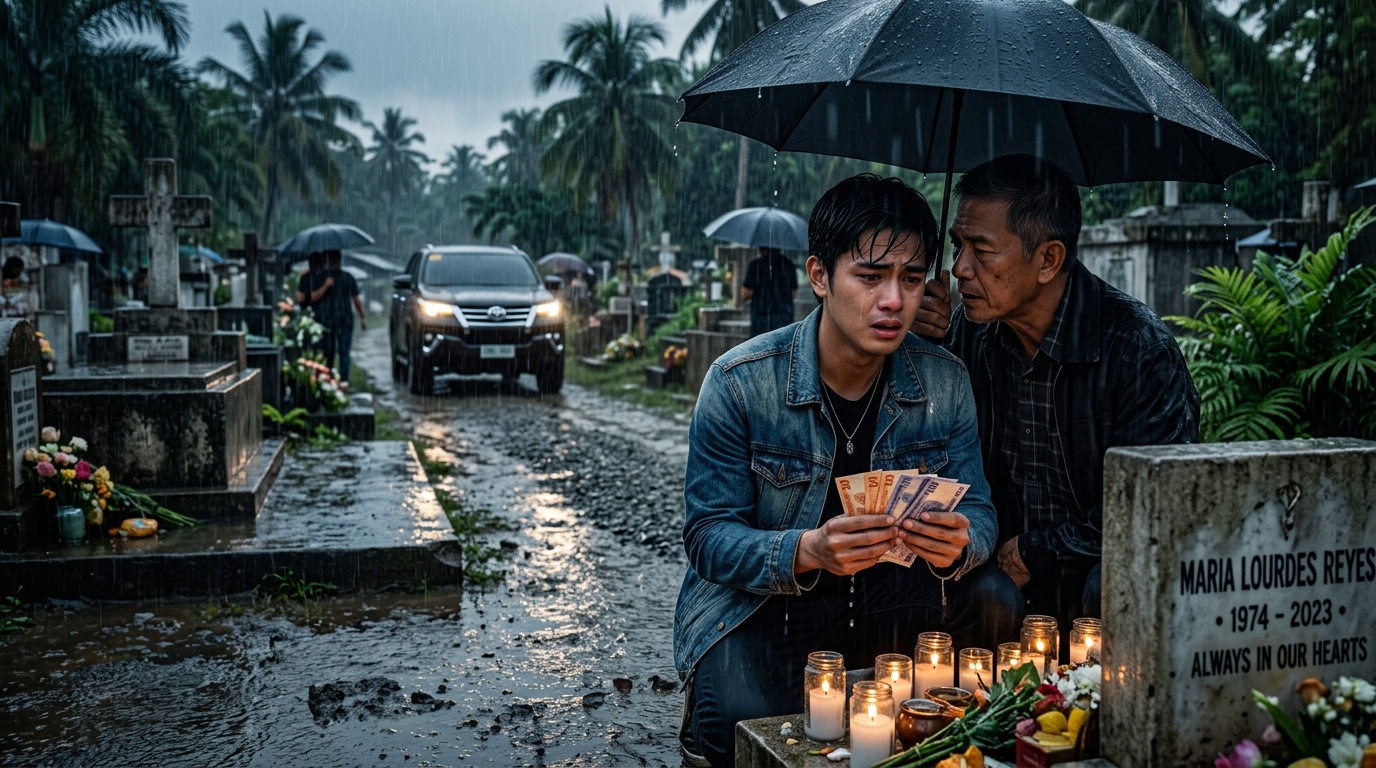
Pagdating ko sa memorial park, malakas ang ulan.
Wala akong payong.
Hindi ko inisip iyon.
Tinakbo ko ang hanay ng mga mausoleum hanggang makita ko ang pangalan ng pamilya namin.
REYES.
Sa ilalim noon, may bagong pangalan.
DON RENATO REYES.
Napaluhod ako sa harap ng marmol.
“Pa,” bulong ko.
Walang lumabas na susunod na salita.
Tatlong taon akong nagalit sa kanya dahil hindi niya ako dinalaw.
Tatlong taon akong umasa na baka may dahilan siya.
Tatlong taon akong naghintay sa sulat na hindi dumating.
Ngayon, nasa harap ako ng pangalan niya, at wala na akong matanong.
“Anak?”
Napalingon ako.
May matandang lalaki sa likod ko. Payat. Basang-basa ang tsinelas. Hawak niya ang isang itim na payong na nanginginig sa hangin.
“Mang Lando?”
Siya ang caretaker ng memorial park. Bata pa ako, nandito na siya. Siya ang nagbubukas ng gate kapag may family visit kami tuwing Undas.
Lumapit siya at itinapat ang payong sa akin.
“Marco,” sabi niya. “Ikaw nga.”
Tumayo ako.
“Ngayon ko lang nalaman. Bakit walang nagsabi sa akin?”
Hindi siya sumagot.
Lumingon siya sa paligid. Sa parking area. Sa likod ng mga puno. Sa maliit na opisina ng caretaker.
Tapos hinawakan niya ang braso ko.
“Sumama ka sa akin.”
“Kailangan ko lang pong manatili dito sandali.”
“Hindi,” sabi niya, mas mahina pero mas madiin. “Hindi ligtas na mag-usap dito.”
Nanigas ako.
“Ano pong ibig ninyong sabihin?”
Napalunok siya.
Tumingin siya sa pangalan ni Papa sa marmol.
Tapos tumingin siya sa akin.
“Marco, makinig ka.”
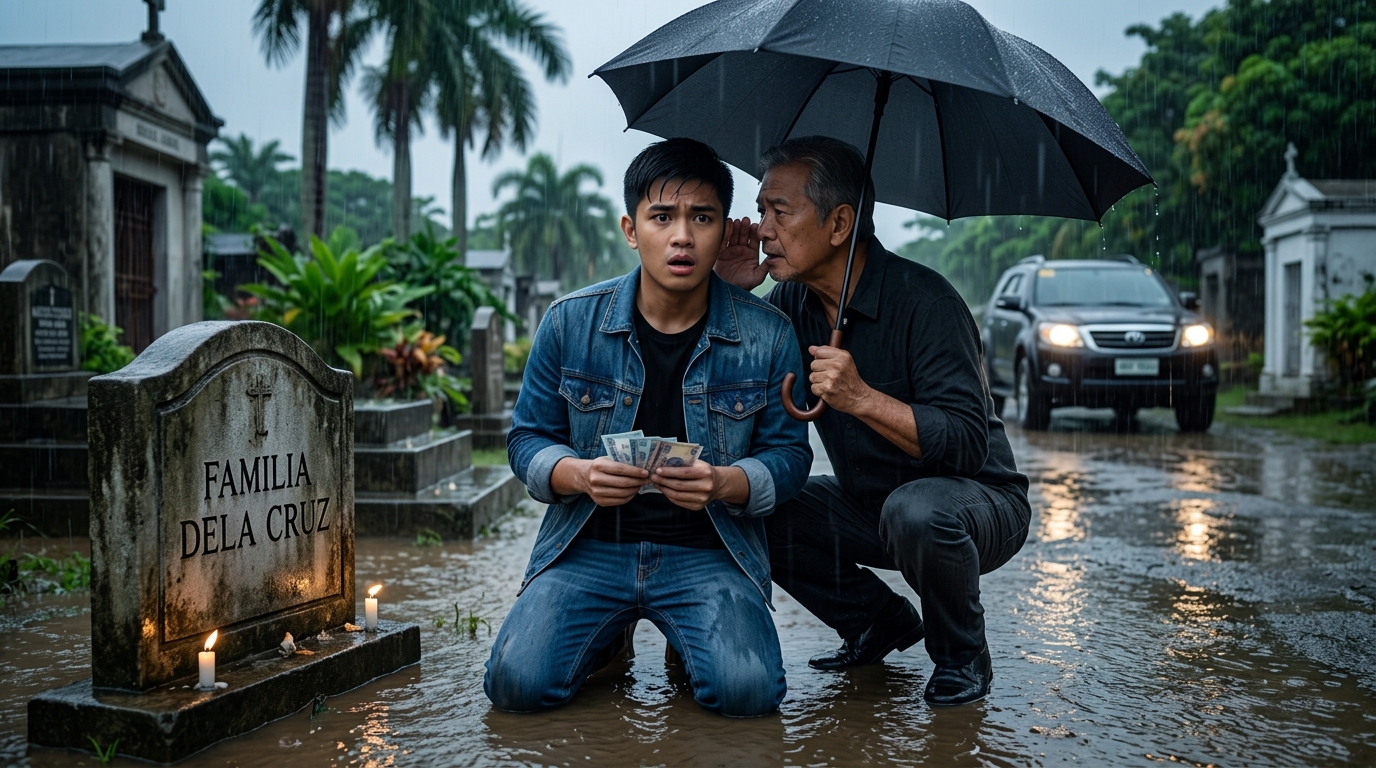
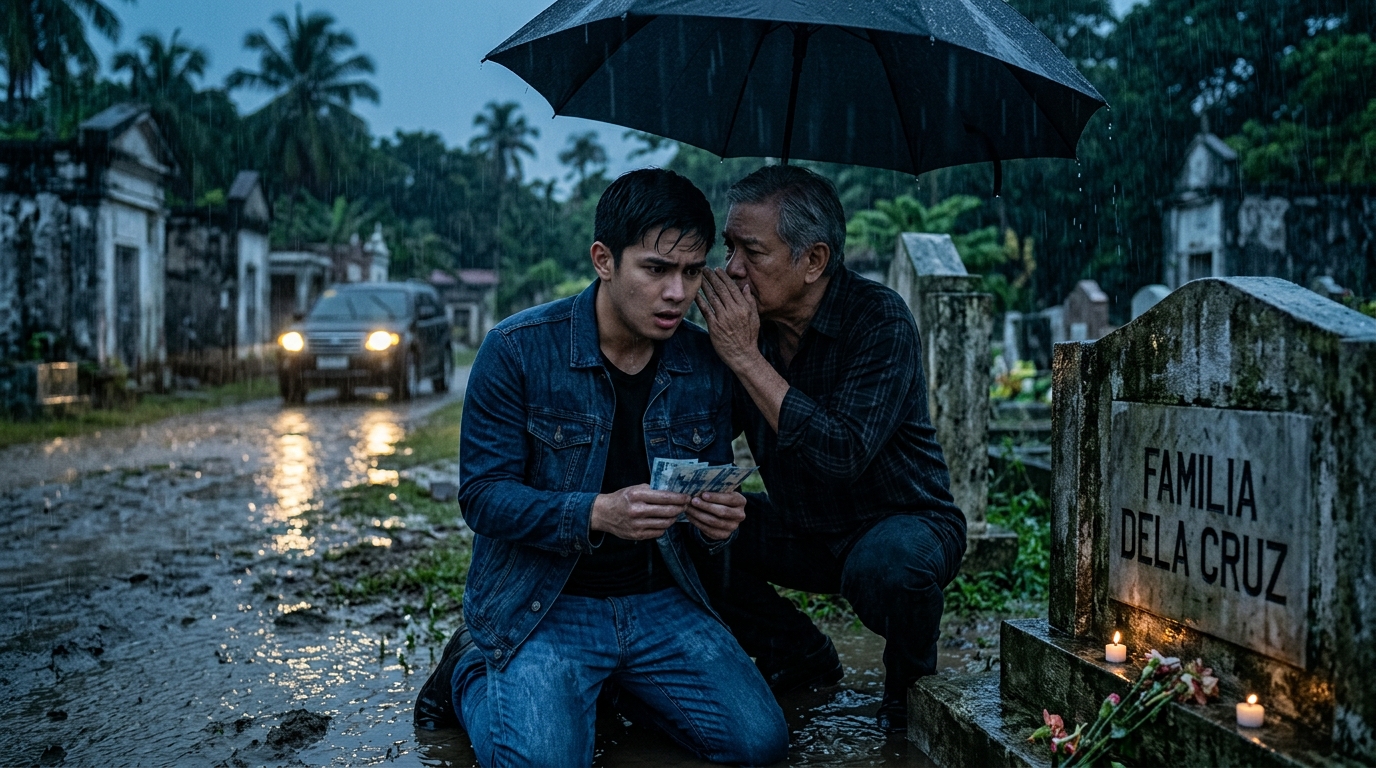
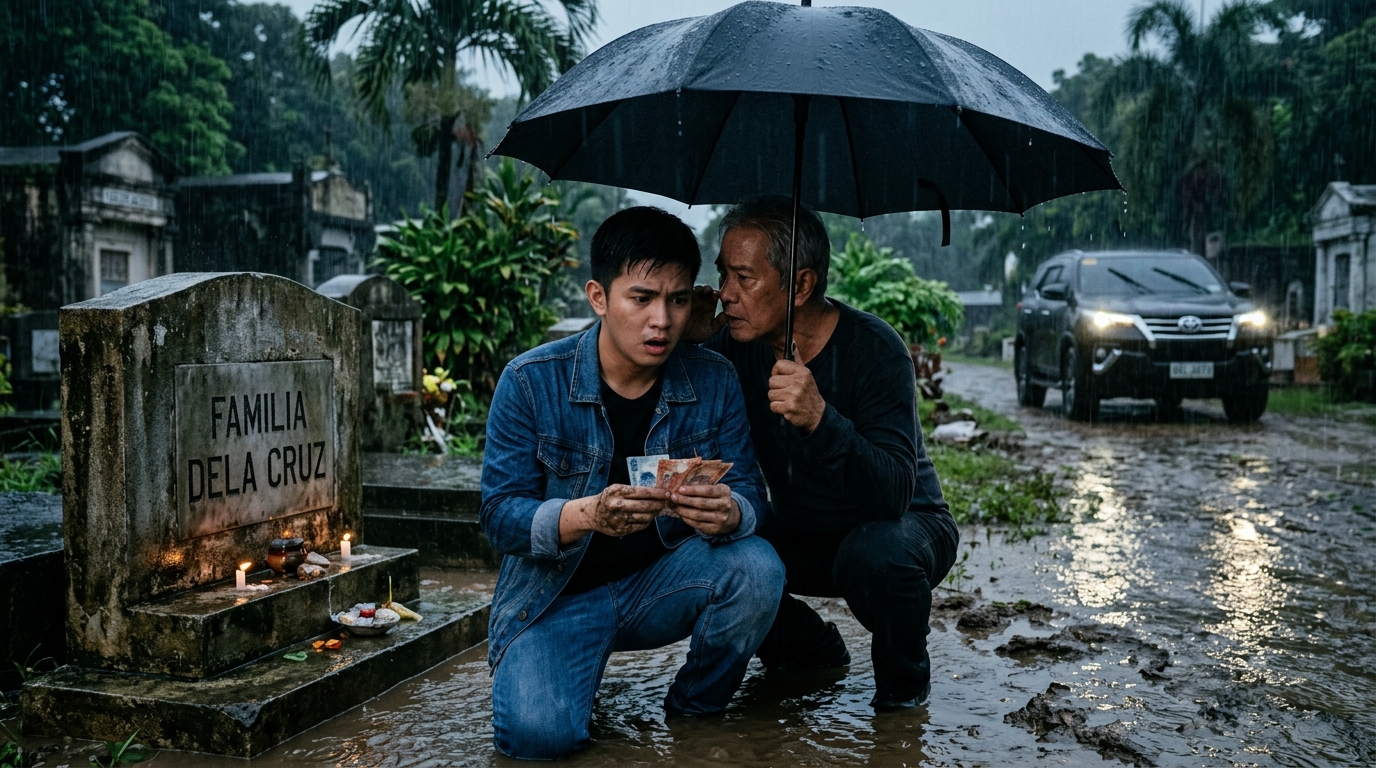
Lumapit siya sa tainga ko.
“Walang laman ang nasa loob niyan.”
Hindi ako nakapagsalita.
“Hindi ko po naiintindihan.”
“Nandoon ako noong dinala nila ang kabaong,” sabi niya. “Sarado. Walang viewing. Walang ibang kamag-anak. Si Vivian lang. Si Jared. Isang doktor. Dalawang lalaki na hindi ko kilala.”
“Kailangan ninyong maging malinaw,” sabi ko.
Huminga siya nang malalim.
“Kinagabihan, may lumabas na van sa likod ng chapel. May sakay na matandang lalaki. Mahina siya, pero gising.”
Bumilis ang tibok ng puso ko.
“Hindi.”
Hinawakan niya ang kamay ko at may inilagay na maliit na susi.
“Bago siya umalis, may iniwan siya sa akin.”
Napatingin ako sa susi.
May nakakabit na lumang keychain.
Nakasulat doon ang palayaw na ako lang at si Papa ang gumagamit.
Kiko.
Nanginginig ang boses ko.
“Nasaan siya?”
Tumingin si Mang Lando sa madilim na daan palabas ng memorial park.
“Sa Antipolo.”
May bumukas na ilaw ng kotse sa parking area.
Pareho kaming napalingon.
Isang itim na SUV ang nakatigil sa ulan.
Kilalang-kilala ko ang plaka.
Kay Jared.
Hinila ako ni Mang Lando papunta sa likod ng mausoleum.
“Umalis tayo ngayon.”
“At doon nagsimula ang lahat.”
BAHAGI 2
Hindi kami dumaan sa main gate.
Dinala ako ni Mang Lando sa likod ng lumang chapel, doon sa maliit na daanan na ginagamit ng mga gardener. Basang-basa ang damit ko. Dumidikit sa balat ko ang lamig, pero hindi iyon ang iniisip ko.
Buhay si Papa.
O baka iyon lang ang gusto kong paniwalaan.
“Bilisan mo,” sabi ni Mang Lando.
“Paano ninyo alam na sa Antipolo siya dinala?”
Hindi siya huminto.
“Narinig ko ang doktor. Sabi niya, ‘Casa Amparo, room seven.’ Hindi ko alam noon kung ano iyon. Hinanap ko kinabukasan.”
“Bakit hindi kayo nagsumbong?”
Huminto siya sa tabi ng lumang storage room.
Tumingin siya sa akin na parang matagal na niyang dinadala ang sagot.
“Sinubukan ko.”
Binuksan niya ang pinto gamit ang sariling susi niya. Madilim sa loob. Kinuha niya ang maliit na flashlight.
“Pagkatapos kong magtanong sa opisina ng memorial park, tinanggal ako sa schedule ng tatlong linggo. May nag-iwan ng sobre sa bahay ko. Pera. May kasamang papel.”
“Ano ang nakasulat?”
“Manahimik ka kung gusto mong manatiling maayos ang pamilya mo.”
Wala akong nasabi.
May pamilya si Mang Lando. May asawa. May mga apo.
Pero kahit takot siya, itinago niya ang susi.
Lumapit siya sa lumang filing cabinet. Binuksan niya ang pangalawang drawer. Kinuha niya ang maliit na plastic envelope.
“Ito ang iniwan ng Papa mo.”
Tinanggap ko iyon.
Sa loob, may USB, lumang litrato, at isang papel na nakatiklop nang apat.
Binuksan ko ang papel.
Pirma ni Papa.
Maiksi lang ang nakasulat.
Marco,
Kung nabasa mo ito, ibig sabihin nakalabas ka na.
Hindi kita iniwan.
Hinaharang nila lahat ng sulat ko.
Huwag kang uuwi nang mag-isa.
Hanapin mo si Atty. Liza Santos.
Trust no one inside the house.
Papa
Napaupo ako sa lumang kahon.
Hindi ko napigilan ang paghinga ko. Parang may humila sa dibdib ko.
“Tatlong taon,” sabi ko. “Tatlong taon akong naniwalang galit siya sa akin.”
“Mahal ka ng Papa mo,” sabi ni Mang Lando. “Lagi kang binabanggit noon.”
Hinawakan ko ang papel.
“Bakit niya ako hinayaang makulong?”
Hindi sumagot si Mang Lando.
At alam ko kung bakit.
Hindi niya alam.
May narinig kaming yabag sa labas.
Pinatay niya agad ang flashlight.
May boses ng lalaki sa malapit.
“Hanapin n’yo sa chapel. Sabi ni Sir Jared, nandito pa ‘yan.”
Napatingin ako kay Mang Lando.
Bumukas ang pinto nang konti.
Hinila niya ako sa likod ng malaking cabinet.
Pumasok ang dalawang lalaki. Hindi sila guard ng memorial park. Nakajacket sila. May hawak na cellphone.
“Wala rito,” sabi ng isa.
“Baka tumakas na.”
“Galit si Sir. Sabi niya huwag daw dapat nakalapit sa caretaker.”
Nanatili akong hindi gumagalaw.
Paglabas nila, hinintay namin ang ilang segundo bago huminga.
“Marco,” bulong ni Mang Lando. “Hindi na ito simpleng pamilya.”
Tumango ako.
“Kailangan kong makita si Papa.”
May lumang motorsiklo si Mang Lando. Ako ang nagmaneho kahit matagal na akong hindi humawak ng manibela. Dumaan kami sa gilid na kalsada palabas ng memorial park.
Sa likod namin, narinig ko ang tunog ng SUV na umaandar.
“Sinusundan tayo,” sabi niya.
“May kakilala ba kayong puwedeng tawagan?”
“Dating driver ng Papa mo. Si Nestor.”
Kinuha ko ang cellphone niya at tinawagan ang numero.
Tatlong ring.
“Ano ‘to, Lando?”
“Nestor, si Marco ‘to,” sabi ko agad.
Tahimik sa kabilang linya.
“Marco?”
“Oo. Kailangan ko ng tulong. Ngayon.”
Hindi siya nagtanong agad.
Sabi lang niya, “Nasaan ka?”
“Papunta kaming Antipolo.”
“Sa Shell Marcos Highway. Sampung minuto.”
Binaba niya ang tawag.
Si Kuya Nestor ang driver namin dati. Siya ang nagturo sa akin magmaneho noong college ako. Tinanggal siya ni Tita Vivian isang buwan matapos akong makulong.
Pagdating namin sa gasolinahan, nandoon na siya. Mas matanda na ang itsura niya. Pero nang makita niya ako, mabilis siyang lumapit.
“Anak.”
Niyakap niya ako nang mahigpit.
Hindi ako sanay na may yumayakap sa akin. Sa loob, lahat may distansya. Lahat may bantay.
Pero sa yakap ni Kuya Nestor, naalala kong hindi pala lahat tumalikod.
“Buhay si Papa,” sabi ko.
Kumalas siya at tumingin kay Mang Lando.
“Sigurado ka?”
Ibinigay ko ang sulat.
Binasa niya iyon. Nang makita niya ang pirma, nagbago ang mukha niya.
“Alam kong may mali,” sabi niya. “Noong tinanggal ako, pinapapirma ako ni Vivian ng clearance. May clause doon na bawal akong makipag-usap sa kahit sinong Reyes.”
“Bakit ka pumirma?”
“Hindi ako pumirma. Kaya hindi nila ibinigay ang separation pay ko.”
Sumakay kami sa van niya.
Sa side mirror, nakita ko ang itim na SUV na papasok sa gasolinahan.
“Yuko,” sabi ni Kuya Nestor.
Yumuko kami ni Mang Lando sa likod.
Dumaan ang SUV sa tabi namin. Si Jared ang nasa passenger seat. May kausap siya sa phone. Galit ang mukha niya.
“Hindi siya titigil,” sabi ko.
“Hindi rin tayo,” sagot ni Kuya Nestor.
Umalis kami sa likod ng gasolinahan.
Habang nasa biyahe, tinawagan ni Kuya Nestor si Atty. Liza Santos.
Hindi ko siya kilala nang personal, pero narinig ko ang pangalan niya noong bata ako. Siya ang abogado ni Papa bago pa lumaki ang kumpanya.
Pagkasagot niya, diretso agad si Kuya Nestor.
“Atty., nandito si Marco. May sulat si Don Renato.”
Tumahimik siya.
Tapos narinig ko ang boses ng babae.
“Nasaan kayo?”
“Papunta sa Casa Amparo.”
“Huwag kayong papasok nang walang record. I-video ninyo. Huwag kayong makikipagtalo. Papunta ako.”
“Sino ang may-ari ng Casa Amparo?” tanong ko.
Sumagot si Atty. Liza sa speaker.
“Private care facility sa Antipolo. Mahal. Tahimik. Doon din minsan dinadala ang mga pasyenteng ayaw ipakita ng pamilya sa publiko.”
“Legal ba iyon?”
“Ang facility, oo. Ang pagtatago ng tao gamit ang maling pangalan, hindi.”
Humigpit ang hawak ko sa sulat ni Papa.
Pagdating namin sa Casa Amparo, mukha itong maliit na resort. Puting pader. Malinis na gate. May halaman. Walang sign na madaling mapansin.
Lumapit kami sa guardhouse.
“Visitor?” tanong ng guard.
“Room seven,” sabi ko. “R. Dela Cruz.”
Napatingin ang guard sa clipboard.
“Sino kayo?”
“Pamilya.”
“Walang visit ngayon.”
Lumabas ako ng van.
“Anong oras puwedeng bumisita?”
“By appointment lang.”
“Kanino mag-a-appointment?”
Hindi siya sumagot.
May lumapit na babaeng staff mula sa loob. Naka-white uniform. Tinignan niya ako.
Bigla siyang natigilan.
“Sir Marco?”
Hindi ko siya kilala.
“Ako nga.”
Lumapit siya nang mabilis, pero tumingin muna sa CCTV sa gilid.
“Ako si Mila. Dati akong private nurse ni Don Renato.”
Nanuyo ang lalamunan ko.
“Nandito siya?”
Hindi siya sumagot agad.
Nakita kong nanginginig ang kamay niya.
“Mamaya na ang paliwanag. Pumasok kayo. Pero tahimik lang.”
Pinapasok niya kami sa side entrance.
Sa hallway, tahimik. May amoy gamot at sabon. Ilang pinto lang ang bukas. Naririnig ko ang mahihinang tunog ng TV sa isang kwarto.
Huminto kami sa Room 7.
Hindi agad binuksan ni Mila ang pinto.
“Sir, ihanda ninyo ang sarili ninyo,” sabi niya.
“Buksan mo.”
Binuksan niya.
Nandoon si Papa.
Nasa kama. Payat. Maputla. May makina sa tabi niya na tahimik lang ang tunog.
Pero dilat ang mata niya.
At nang makita niya ako, gumalaw ang labi niya.
“Marco.”
Parang bumalik lahat ng lakas ko at nawala rin agad.
Lumapit ako sa kama.
“Pa.”
Hinawakan ko ang kamay niya. Mainit. Totoo.
“Akala ko wala ka na.”
Mahina siyang ngumiti.
“Akala ko hindi ka na nila palalabasin.”
Yumuko ako. Hindi ako umiyak nang malakas. Napagod na ako sa ganoon. Pero hindi ko napigilan ang luha.
“Bakit, Pa? Bakit nangyari ito?”
Tumingin siya kay Mila.
Lumapit si Mila at inayos ang unan niya.
“Sandali lang ang kaya niyang magsalita,” sabi niya. “Pero malinaw ang isip niya.”
Dumating si Atty. Liza makalipas ang dalawampung minuto.
Pumasok siya dala ang tablet, recorder, at dalawang kasama mula sa opisina niya. Hindi siya nag-aksaya ng oras.
“Renato,” sabi niya. “Kailangan kong marinig mula sa iyo.”
Tumango si Papa.
In-on ni Atty. Liza ang recorder.
“Sabihin mo ang pangalan mo.”
“Renato Reyes.”
“Alam mo ba kung nasaan ka?”
“Casa Amparo. Antipolo.”
“Sino ang nagdala sa iyo rito?”
Huminga siya nang mabigat.
“Vivian Reyes. Jared Soriano.”
Napalunok ako.
Hindi Reyes si Jared.
Soriano pa rin ang apelyido niya sa papel.
“Pinilit ka ba nilang pumirma ng transfer documents?”
“Maraming beses.”
“Pumirma ka ba?”
“Hindi.”
Tumingin sa akin si Papa.
“Marco, hindi kanila ang kumpanya.”
Napatingin ako kay Atty. Liza.
“Ano ibig sabihin?”
Binuksan niya ang tablet at ipinakita ang scanned documents.
“Two years bago ka makulong, gumawa ang Papa mo ng family trust. Ikaw ang primary beneficiary. May board safeguards. Kapag nawala siya sa public view nang higit sa anim na buwan nang walang verified medical declaration mula sa tatlong independent doctors, automatic na kailangan ng court review bago galawin ang major assets.”
“Pero sabi nila nailipat na sa kanila lahat.”
“Peke ang karamihan sa pinakita nila,” sabi ni Atty. Liza. “Pero hindi sapat ang hinala. Kailangan natin ang original files.”
“Nasaan?”
Sumagot si Papa.
“Lumang bahay sa Quezon City. Sa ilalim ng altar ng Mama mo.”
Hindi ako nakahinga agad.
Ang lumang bahay.
Hindi namin iyon ibinenta dahil paborito iyon ni Mama. Akala ko nakatiwangwang lang.
“May kopya ng lahat,” sabi ni Papa. “Kasama ang records ng tunay na kumuha ng pera sa kumpanya.”
Tumingin siya sa akin nang diretso.
“Hindi ikaw.”
Para akong binunutan ng tinik na tatlong taon nang nakabaon.
“Alam mo?”
“Hindi agad. Noong nalaman ko, nasa loob ka na. Sinubukan kitang puntahan. Hindi nila ako pinayagan. Pagkatapos noon, dito na nila ako dinala.”
Sumingit si Mila.
“May mga araw na sinasabi nila sa staff na bawal siyang tumanggap ng tawag. Bawal bisita. Ibang pangalan ang gamit.”
“Bakit ka nanahimik?” tanong ko sa kanya.
Napayuko siya.
“May anak ako, Sir. Natakot ako. Pero itinago ko ang logbook. Nandoon lahat ng visit ni Ma’am Vivian at Sir Jared.”
Kinuha niya sa cabinet ang maliit na notebook.
Ibinigay niya kay Atty. Liza.
“Simula ngayon,” sabi ni Atty., “walang gagalaw kay Renato nang walang legal record.”
Tumunog ang cellphone ni Kuya Nestor.
Tiningnan niya ang screen.
“Jared.”
Tumingin kami sa isa’t isa.
“Sagutin mo,” sabi ni Atty. Liza. “Speaker.”
Sinagot niya.
“Nasaan ka?” sigaw ni Jared.
“Nasa biyahe.”
“Huwag kang magsinungaling. Kasama mo si Marco.”
Tahimik si Kuya Nestor.
“Sabihin mo sa kanya,” sabi ni Jared, “kung ayaw niyang bumalik sa kulungan, umalis siya sa Antipolo ngayon.”
Napatingin ako kay Papa.
Nakita kong nagbago ang mata niya. Mahina ang katawan niya, pero kilala ko ang tinging iyon.
Tingin iyon ng taong tapos nang matakot.
Kinuha ko ang phone.
“Jared.”
Sandaling tumahimik ang linya.
“Marco.”
“Nakita ko na siya.”
Hindi siya sumagot.
“Alam ko nang buhay si Papa.”
Narinig ko ang paghinga niya.
Tapos bumaba ang boses niya.
“Hindi mo alam kung ano ang pinapasok mo.”
“Alam ko. Tatlong taon na akong nasa loob ng problema na kayo ang gumawa.”
Tumawa siya, pero hindi buo.
“Walang maniniwala sa’yo. Ex-convict ka.”
Tiningnan ko ang recorder sa mesa.
“Baka hindi ako ang kailangan nilang paniwalaan.”
Pinatay ko ang tawag.
Hindi nagdiwang ang kahit sino sa kwarto.
Alam naming nagsisimula pa lang.
Umalis kami sa Casa Amparo nang kasama si Papa sa medical transport na inayos ni Atty. Liza. Hindi siya dinala sa mansyon. Dinala siya sa private hospital sa Ortigas kung saan may sariling security at malinaw na admission records.
Habang inaasikaso siya, pumunta kami sa lumang bahay sa Quezon City.
Pagbukas ng gate, sumikip ang dibdib ko.
Doon ako lumaki.
Doon ako tinuruan ni Mama magdasal.
Doon ako pinagalitan ni Papa noong una akong nahuli na nagsinungaling tungkol sa grades ko.
Walang ilaw sa loob. Pero buo pa ang bahay.
Pumasok kami sa maliit na chapel room. Nandoon pa ang altar ni Mama. May picture niya sa gitna. May tuyong sampaguita sa gilid.
“Sa ilalim,” sabi ko.
Tinulungan ako ni Kuya Nestor buhatin ang mabigat na kahoy na mesa ng altar.
May maliit na metal plate sa sahig.
Ginamit ko ang susi na ibinigay ni Mang Lando.
Sakto.
Bumukas iyon.
Sa loob, may fireproof box.
Hindi iyon mabigat, pero nanginginig ang kamay ko habang binubuksan.
Nandoon ang original trust documents.
Board resolutions.
Medical letters.
At isang external hard drive.
May maliit na note sa ibabaw.
Kiko, huwag kang matakot sa laman nito.
Tiningnan ako ni Atty. Liza.
“Handa ka?”
Tumango ako.
Binuksan niya ang laptop.
Sa loob ng drive, may folders na naka-date.
Isa sa mga file ang may pangalan:
JARED_TRANSFERS_FINAL.
Binuksan niya.
Spreadsheet. Bank references. Vendor names. Dummy companies.
At sa bawat approval trail, may pangalan ni Jared.
May isa pang folder.
VIVIAN_AUDIO.
Hindi ko agad gustong pakinggan.
Pero pinindot ni Atty. Liza ang unang file.
Boses ni Tita Vivian ang lumabas.
“Kapag hindi natin naalis si Marco, hindi natin makukuha ang board.”
Boses ni Jared ang sumunod.
“Madali lang. Gagamitin natin ang access niya. Siya ang pipirma sa system.”
“Paano kung lumaban si Renato?”
“Pahihintuin natin siya. Sabihin natin kailangan niya ng rest. Walang makakakita sa kanya.”
Tumigil ang audio.
Walang nagsalita.
Hindi ko maramdaman ang galit nang buo.
Mas malakas ang pagod.
Tatlong taon ng buhay ko ang ginamit nila na parang papel lang.
Kinopya ni Atty. Liza ang files sa secured drive.
“Hindi tayo pupunta sa bahay,” sabi niya. “Pupunta tayo sa korte at sa SEC. Pagkatapos, sa board.”
Kinabukasan, umulan ulit.
Pero iba na ang pakiramdam ko.
Hindi na ako ang lalaking pinalayas sa mansyon.
Kasama ko na si Papa, kahit mahina pa siya.
Kasama ko si Atty. Liza.
Kasama ko sina Kuya Nestor, Mang Lando, at Mila.
Hindi marami ang tao ko.
Pero totoo sila.
Naganap ang emergency board meeting sa headquarters ng Reyes Holdings sa BGC.
Pagpasok ko sa lobby, napatingin ang mga empleyado.
May mga nakakilala sa akin.
May umiwas ng tingin.
May bumubulong.
Hininto ako ng guard sa elevator.
“Sir, bawal po kayo sa executive floor.”
Inabot ni Atty. Liza ang court order.
“Basahin mo.”
Tinawag ng guard ang supervisor. Pagkalipas ng ilang minuto, pinapasok kami.
Sa boardroom, nandoon si Tita Vivian.
Naka-red blazer siya. Diretso ang upo. Parang siya ang may-ari ng buong building.
Katabi niya si Jared, naka-suit, hawak ang phone.
Sa dulo ng mesa, may mga board members at dalawang foreign investors.
Pagpasok ko, tumayo agad si Jared.
“Anong kalokohan ito?”
Hindi ako sumagot.
Si Atty. Liza ang nagsalita.
“Emergency petition has been filed. Major asset sale is suspended.”
Tumawa si Tita Vivian.
“Liza, matagal ka nang retired sa drama ni Renato.”
“Hindi drama ang forged documents,” sagot ni Atty. Liza.
Nanigas ang mukha ni Tita Vivian.
“Careful.”
“Hindi ako ang dapat mag-ingat.”
Pumasok ang dalawang legal officers kasama ang isang representative mula sa court.
Sumunod si Mila.
Sumunod si Mang Lando.
Sumunod si Kuya Nestor.
At huli, pumasok si Papa sa wheelchair.
Tumayo ang lahat.
Si Tita Vivian ang unang namutla.
“Renato…”
Hindi siya sinagot ni Papa.
Tumingin siya sa board.
“Ako si Renato Reyes,” sabi niya, mahina pero malinaw. “Hindi ako nagbigay ng kontrol sa asawa ko. Hindi ako pumirma ng transfer ng kumpanya. At hindi ko itinakwil ang anak ko.”
Nagtaas ng boses si Jared.
“This is manipulation. He’s not medically fit.”
Inabot ni Atty. Liza ang medical clearance.
“Evaluated this morning by two independent doctors. Clear ang statement niya.”
Tinuro ni Jared ako.
“Siya ang convicted. Siya ang magnanakaw.”
Sa unang pagkakataon, ako ang tumawa nang maikli.
“Tatlong taon mong inulit ‘yan. Pagod ka na ba?”
Lumapit si Atty. Liza sa screen at sinaksak ang drive.
Lumabas sa monitor ang transfer trail.
Pangalan ni Jared.
Dummy companies.
Approval logs.
Emails.
Audio file.
Hindi niya pinatugtog lahat. Ilang segundo lang.
Sapat na.
Narinig sa boardroom ang boses ni Vivian.
“Kapag hindi natin naalis si Marco…”
Pinahinto ni Jared ang audio.
“Illegal recording!”
“Pwede mong sabihin sa korte,” sabi ni Atty. Liza.
Lumapit ang isa sa board members kay Papa.
“Renato, bakit hindi ka nakipag-ugnayan?”
Tumingin si Papa kay Vivian.
“Dahil ang taong pinagkatiwalaan ko ang unang nagsara ng pinto.”
Hindi sumagot si Vivian.
Pero si Jared, hindi pa rin tumigil.
“Wala kayong mapapatunayan ngayon. Kahit ano pa ‘yan, tapos na ang sale. May board approval.”
“Wala,” sabi ni Atty. Liza. “Invalid ang approval dahil base sa pekeng control documents. At may temporary freeze order na sa corporate accounts na konektado sa flagged transfers.”
Napatingin si Jared sa phone niya.
Doon siya unang natakot.
Hindi niya naitago.
Sunod-sunod ang tawag na pumasok.
Tumayo si Vivian.
“Renato, pag-usapan natin ito bilang pamilya.”
Ngayon ako nagsalita.
“Hindi ninyo ako tinuring na pamilya noong pinalayas ninyo ako kahapon.”
Tumingin siya sa akin.
“Marco, nasaktan ka. Naiintindihan ko.”
“Hindi,” sabi ko. “Hindi mo naiintindihan. Kasi kahit kailan, hindi ka nagsisi. Natakot ka lang mahuli.”
Tahimik ang kwarto.
Lumapit si Papa sa akin. Hinawakan niya ang kamay ko.
“Anak,” sabi niya. “Hindi mo kailangang sumigaw.”
Tumango ako.
Tama siya.
Hindi ko kailangang sumigaw.
Nandoon na ang ebidensya.
Nandoon na siya.
At sa unang pagkakataon, hindi ako mag-isa.
May pumasok na dalawang opisyal at kinausap si Vivian at Jared. Hindi ko na pinakinggan lahat. Legal terms. Orders. Appearance. Custody for questioning.
Ang narinig ko lang ay ang mahinang tanong ni Jared.
“Mom, do something.”
Tumingin si Vivian sa kanya.
Wala siyang nagawa.
Habang inilalabas sila ng boardroom, dumaan si Jared sa harap ko.
“Hindi pa tapos ito,” sabi niya.
Tiningnan ko siya nang diretso.
“Para sa akin, kahapon pa nagsimula.”
Hindi siya nakasagot.
Pagkaalis nila, bumagsak sa upuan ang isa sa investors. Ang iba, hindi makatingin sa akin.
Si Papa ang nagsalita.
“Meeting adjourned.”
Dalawang salita lang.
Pero sapat na para matapos ang palabas na pinatakbo nila nang tatlong taon.
Akala ko doon na magtatapos ang araw.
Pero mali ako.
Pagbalik namin sa hospital, may naghihintay na babae sa hallway.
Hindi ko siya kilala.
Nasa late twenties siya. Simple ang damit. Hawak niya ang isang brown envelope.
Lumapit siya kay Atty. Liza.
“Ako po si Ana Soriano.”
Napatingin ako.
Soriano.
Apelyido ni Jared.
“Ano ang kailangan mo?” tanong ni Atty. Liza.
Tumingin siya sa akin.
“Kailangan kong makausap si Sir Marco.”
Ako naman ang lumapit.
“Ako si Marco.”
Nanginginig ang kamay niya habang inaabot ang envelope.
“Pasensya na po. Ngayon ko lang nalakas ang loob ko.”
Binuksan ko ang envelope.
May birth certificate.
May lumang picture ni Vivian, mas bata pa siya.
May kasamang dokumento mula sa isang provincial hospital sa Batangas.
Hindi ko agad naintindihan.
Si Atty. Liza ang unang nakapansin.
Tumingin siya kay Ana.
“Sino ka kay Vivian?”
“Anak niya po.”
Tahimik.
“Anak?” ulit ko.
Tumango siya.
“Mas matanda po ako kay Jared. Ako ang iniwan niya sa lola ko bago siya nagpakasal kay Don Renato.”
Humawak ako sa pader.
Hindi pa tapos.
Nagpatuloy si Ana.
“Hindi po ako pumunta para humingi. Pumunta ako dahil may sinabi si Jared noong nakaraang linggo. Sabi niya, kapag naisara ang sale ng Reyes Holdings, aalis na sila ng bansa. At ang unang gagawin nila…”
Huminto siya.
Tumingin siya sa kwarto ni Papa.
“…ililipat nila si Don Renato sa lugar na walang makakahanap.”
Naramdaman kong humigpit ang kamay ko sa envelope.
Pero may isa pa siyang inilabas.
USB.
“Ito po ang kopya ng usapan nila. Hindi lang tungkol sa kumpanya.”
Tumingin siya sa akin.
“Sir Marco, may iba pa silang tinago.”
Binuksan ni Atty. Liza ang USB sa laptop.
Isang folder lang ang laman.
Pangalan ng folder:
MARCO CASE ORIGINAL.
Hindi ako gumalaw.
Pinindot niya.
May scanned confession.
May email thread.
May pangalan ng judge liaison.
May resibo ng bayad.
At sa pinakadulo, may video.
Si Jared ang nasa screen. Nasa kotse siya. Ka-video call si Vivian.
“Kapag nakulong si Marco,” sabi niya sa recording, “wala nang hahadlang. Si Renato na lang ang problema.”
Pinahinto ni Atty. Liza ang video.
Walang nagsalita.
Hindi lang pala nila kinuha ang kumpanya.
Hindi lang nila itinago si Papa.
Ang kasong sumira sa pangalan ko, sa buhay ko, at sa tatlong taon ko, planado mula umpisa.
Umupo ako sa hallway.
Hindi ako nawalan ng lakas.
Sa totoo lang, doon ako unang tumibay.
Tumingin ako kay Ana.
“Bakit mo ito ibinigay?”
Lumunok siya.
“Dahil buong buhay ko, pinili kong manahimik para mapansin ako ng nanay ko. Pero kagabi, narinig ko siyang sabihin kay Jared na kung kailangan niya akong itanggi ulit, gagawin niya.”
Bumaba ang tingin niya.
“Doon ko naintindihan na hindi ako anak sa kanya. Gamit lang ako.”
Tumayo ako.
Hindi ko siya niyakap. Hindi iyon natural sa sandaling iyon.
Pero tinanggap ko ang envelope.
“Salamat.”
Tumango siya.
Pumasok ako sa kwarto ni Papa.
Gising siya.
Alam niyang may bago.
“Pa,” sabi ko. “May ebidensya na para buksan ulit ang kaso ko.”
Matagal siyang tumingin sa akin.
Tapos tumulo ang luha niya.
“Anak, patawarin mo ako.”
Umiling ako.
“Hindi ikaw ang dapat humingi.”
Lumapit ako sa kanya.
“Pero kailangan mong lumakas. Hindi pa tapos ang laban.”
Hinawakan niya ang kamay ko.
“Hindi na ikaw ang lalaban mag-isa.”
Kinabukasan, pumutok ang balita sa business pages.
Hindi ko binasa lahat.
Hindi ko kailangan ng palakpak.
Ang kailangan ko ay pangalan ko.
At unti-unti, binawi ko iyon.
Na-freeze ang sale ng Reyes Holdings.
Sinuspinde ang authority ni Vivian at Jared.
Nagsimula ang review sa kaso ko.
Nagbigay ng sworn statements sina Papa, Mang Lando, Mila, Kuya Nestor, at Ana.
May mga empleyadong dati’y takot magsalita ang isa-isang lumapit.
May accountant na nagpadala ng files.
May dating IT staff na umamin kung paano ginamit ang access ko.
Hindi naging mabilis ang hustisya.
Pero gumalaw na.
At sapat iyon para makahinga ako.
Isang linggo matapos ang boardroom, bumalik ako sa mansyon.
Hindi para manirahan.
Para kunin ang portrait ni Papa at Mama.
Nandoon si Tita Vivian sa sala, wala nang wine, wala nang kayabangang suot sa mukha. May abogado sa tabi niya.
Hindi siya tumingin sa akin nang diretso.
“Marco,” sabi niya. “Puwede pa nating ayusin ito.”
Tinanggal ko ang portrait sa pader.
“Hindi na.”
“Pamilya tayo.”
Huminto ako.
Tumingin ako sa kanya.
“Hindi. Naging asawa ka ng Papa ko. Pero hindi ka naging pamilya sa akin.”
Wala siyang naisagot.
Paglabas ko, nakita ko si Jared sa may hagdan. Hindi siya puwedeng lumapit dahil may bantay.
Galit pa rin ang mata niya.
Pero wala na ang yabang.
“Masaya ka na?” tanong niya.
Hindi ako sumagot agad.
Tiningnan ko ang bahay na akala ko dati ay tahanan.
Tapos tumingin ako sa kanya.
“Hindi pa.”
Kumunot ang noo niya.
“Hindi ako masaya sa nangyari. Pero payapa ako na alam na ng lahat ang totoo.”
Lumabas ako dala ang portrait.
Sa labas, naghihintay si Kuya Nestor.
Sa likod ng van, nakasakay si Papa. Pinilit niyang sumama kahit bawal pa siyang mapagod.
“Okay ka?” tanong niya.
Tumango ako.
“Uuwi na tayo?”
Tumingin siya sa lumang bahay sa likod namin.
“Hindi diyan,” sabi ko.
“Sa Quezon City?”
“Oo. Sa bahay ni Mama.”
Ngumiti siya nang mahina.
Doon kami bumalik.
Hindi ito kasing laki ng mansyon.
May tumutulong gripo. May lumang pintura. May bakas ng panahon.
Pero sa unang gabi namin doon, nakatulog ako nang walang bantay sa pinto.
Walang sigaw.
Walang kasinungalingan.
Sa sala, nakalagay ang portrait ni Mama at Papa.
Sa tabi noon, inilagay ko ang maliit na keychain.
Kiko.
Akala ko susi lang iyon ng kahon.
Hindi pala.
Iyon ang unang patunay na kahit itinago nila sa akin ang lahat, may naiwan pa ring daan pauwi.
At ang huling twist?
Hindi ang pagbagsak ni Vivian.
Hindi ang pag-amin ni Ana.
Hindi rin ang pagbabalik ni Papa.
Ang pinakamatinding nalaman ko ay nasa huling pahina ng trust documents.
Hindi lang sa akin iniwan ni Papa ang Reyes Holdings.
Limampung porsyento ng voting control ay inilagay niya sa employee trust.
Para sa mga taong pinatahimik, tinanggal, at tinakot nina Vivian at Jared.
Tiningnan ako ni Papa nang mabasa ko iyon.
“Hindi dapat pamilya lang ang nagmamay-ari ng pinaghirapan ng marami,” sabi niya.
Doon ko naintindihan.
Hindi imperyo ang binuo niya.
Bahay iyon.
At sa unang pagkakataon matapos ang tatlong taon, alam kong hindi na ako bumalik para maghiganti.
Bumalik ako para buksan ang pinto para sa lahat ng pinalayas nila.