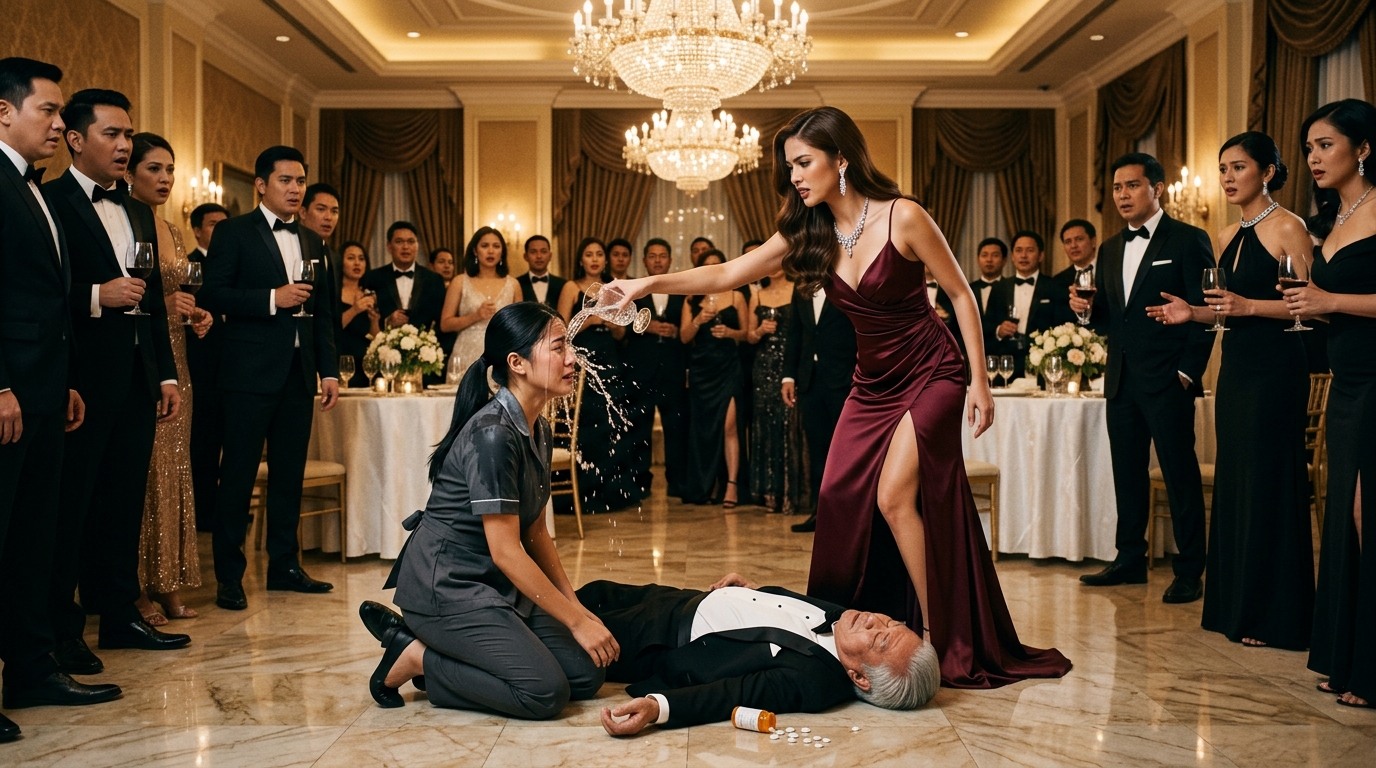
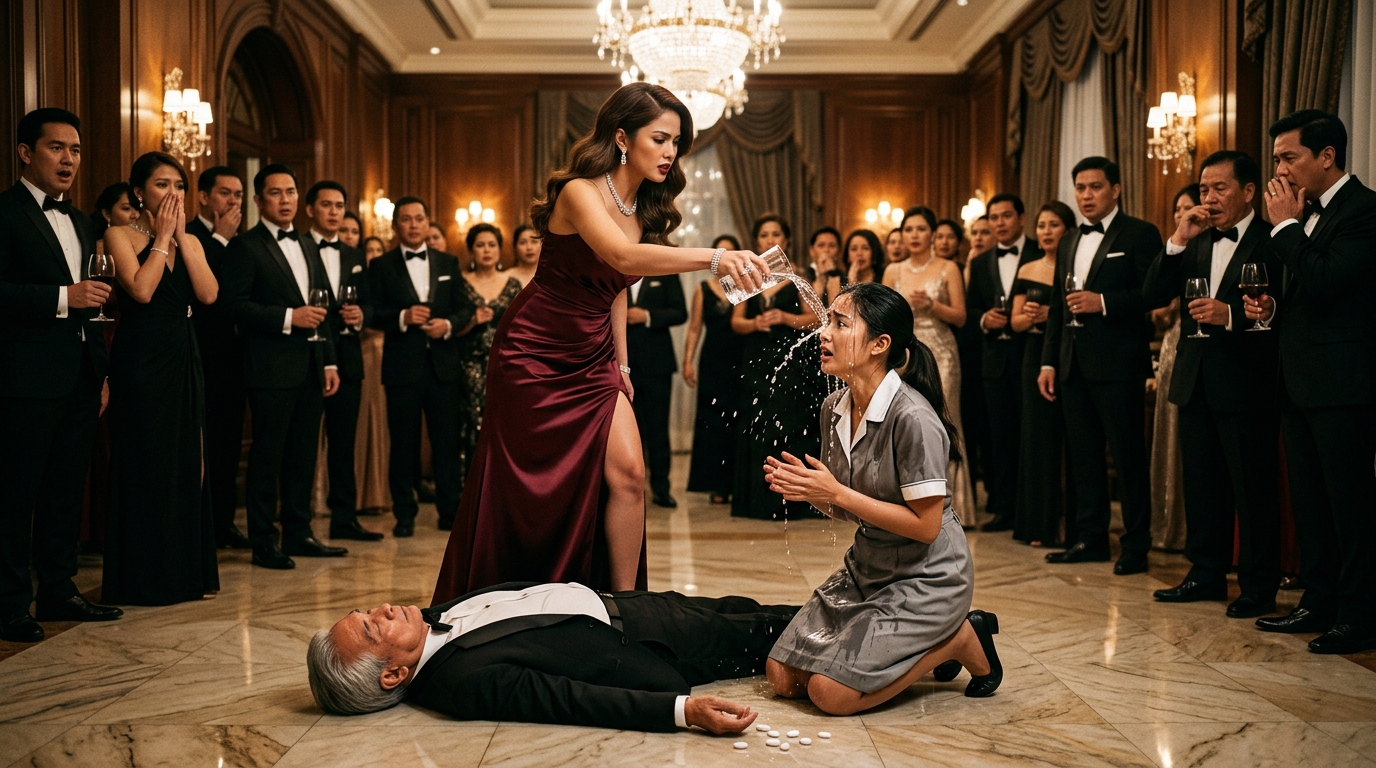
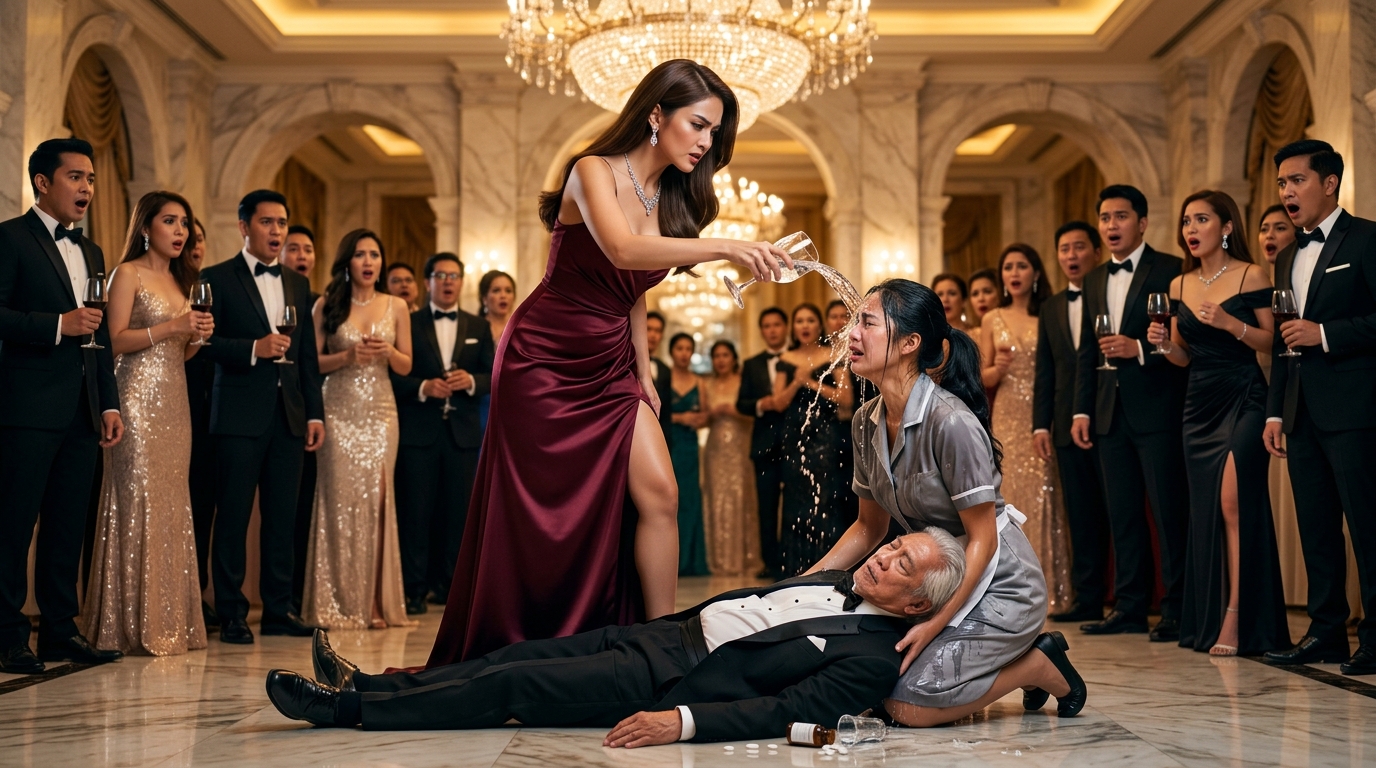
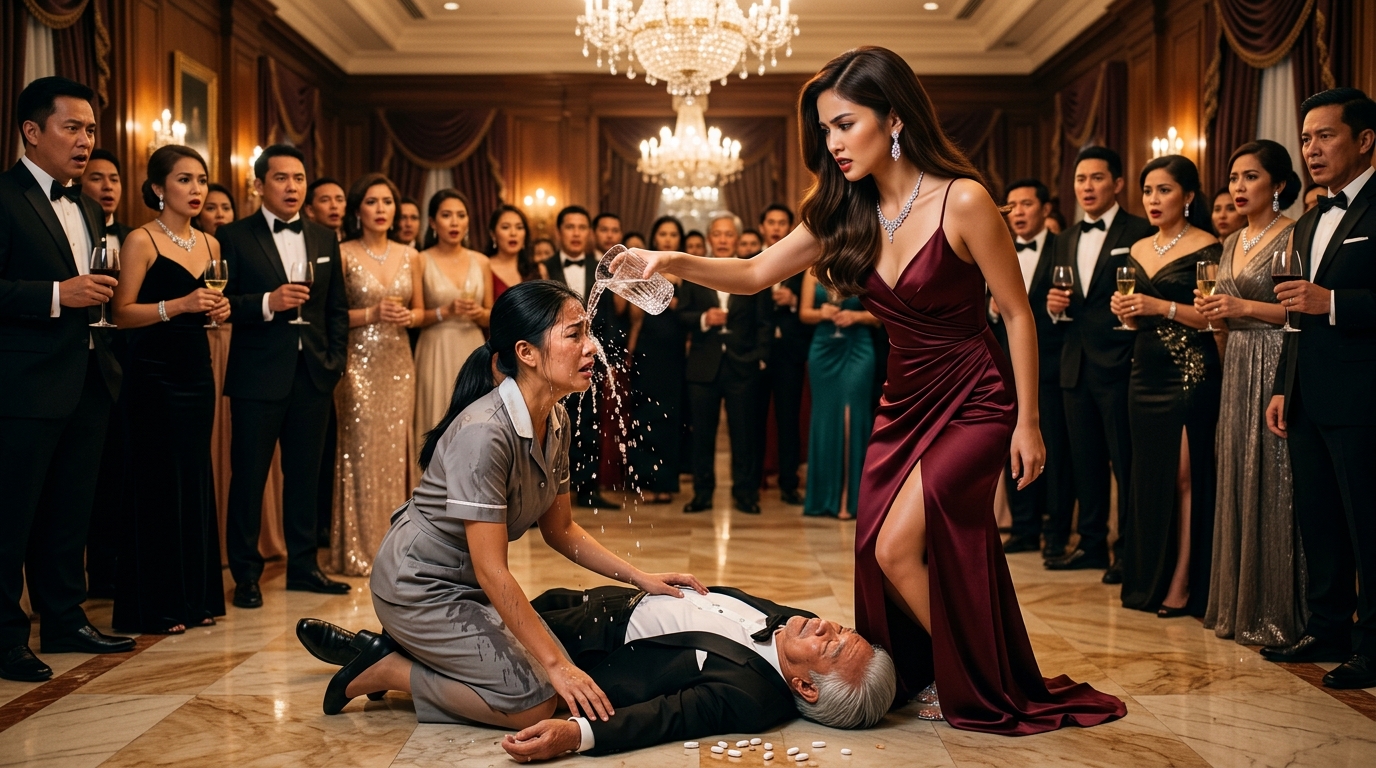
“Hayaan mong mamatay siya!” sigaw ng mayamang babae habang binubuhusan ng inumin ang janitress na pilit nagliligtas ng isang buhay—wala silang ideyang ilang minuto na lang ay magsisimula ang pagbagsak nilang lahat.
BAHAGI 2
Hindi sumagot ang kahit sino. Parang sabay-sabay na nawala ang boses ng mahigit dalawang daang taong naroon. Ang lalaking bagong dating ay lumuhod sa tabi ng matanda. “Papa…” Mahigpit niyang hinawakan ang kamay nito. Napaluha siya nang marinig ang mahina nitong paghinga. “Sir…” Lumapit ang doktor ng hotel. “Nakalampas na po siya sa pinakamapanganib na sandali.” “Kung nahuli pa nang kahit dalawang minuto ang CPR at paggamit ng AED, baka hindi na namin siya naisalba.” Unti-unting bumaling ang tingin ng lalaki sa akin. Basang-basâ pa rin ang uniporme ko. May mantsa pa ng cranberry juice ang aking dibdib. Namumula ang kaliwa kong pisngi dahil sa malakas na pagkakahablot sa akin kanina. Tahimik niya akong minasdan. “Ikaw ba ang nagligtas sa ama ko?” Tumango ako. “Hindi lang po ako…” Napatingin ako sa batang waiter. “Kung hindi rin po siya kumuha ng AED…” Agad na lumapit ang bata. Halatang kinakabahan. “Pasensya na po, Sir…” “Natakot po ako kanina.” Hindi nagsalita ang lalaki. Inilagay niya ang kamay sa balikat ng batang waiter. “Pero tumulong ka.” “At sapat na iyon.” Napaluha ang bata. Sa unang pagkakataon… Nagsalita si Vanessa. “Adrian…” Malambing ang tono niya. “Love, hindi mo pa alam ang buong nangyari.” Ngayon lamang nalaman ng karamihan ang pangalan ng lalaki. Si Adrian Castillo. Tagapagmana ng Castillo Group. Isa sa pinakamalalaking conglomerate sa Pilipinas. Ngunit hindi iyon ang ikinagulat ng mga bisita. Mas ikinagulat nila ang sumunod niyang sinabi. “Simula ngayon…” “Huwag mo na akong tawaging ‘love’.”
Parang may sumabog sa gitna ng ballroom. Namutla si Vanessa. “Adrian…” “Hindi pa ako tapos.” Mahinahon ang boses niya. Ngunit iyon ang mas nakakatakot. Lumapit ang general manager. “Sir…” Ngunit itinaas lamang ni Adrian ang isang kamay. “Tawagin ang head of security.” “Opo, Sir.” “Isara ang lahat ng labasan ng hotel.” Nagkatinginan ang mga bisita. May ilan ang napabulong. “Bakit isasara ang hotel?” Hindi na sila pinaghintay pa. “Dahil walang aalis hangga’t hindi ko nalalaman kung bakit walang tumulong sa ama ko.” Tahimik ang lahat. Ilang minuto ang lumipas… Dumating ang head of security. “Sir.” “Ihanda ang lahat ng CCTV.” “Kasama ang hallway.” “Kasama ang ballroom.” “Kasama ang parking.” “Opo.”
Biglang nagsalita si Vanessa. “Hindi na kailangan iyan.” Napatingin si Adrian. “Bakit?” “Naresolba na naman ang problema.” Umiling siya. “Hindi.” “Ang problema…” “Doon pa lang nagsisimula.” Isa-isang lumabas sa malaking LED screen ang mga kuha ng CCTV. Makikita roon ang matandang unti-unting napapahawak sa dibdib. Makikita ring paulit-ulit kong pinindot ang emergency alarm. Makikita ang ilang empleyadong dumaan. May tumigil. May nag-atubili. Ngunit umalis din. Kasunod noon… Lumabas ang eksenang pumasok ako sa ballroom habang itinutulak ang wheelchair. Narinig sa recording ang boses ko. “May emergency po! Tulungan ninyo kami!” Tahimik ang lahat habang nanonood.
Pagkatapos… Lumabas ang eksenang hinablot ako ni Vanessa. At ilang segundo lang ang lumipas… Kitang-kita sa video ang pagbuhos niya ng cranberry juice sa mukha ko. May ilang bisitang napayuko. May ibang napailing. May isang matandang babae ang napaluha. Hindi nila napansin ang bigat ng ginawa nila habang nangyayari iyon. Ngayon lang nila nakita ang buong katotohanan. Biglang tumayo si Adrian. Lumapit siya kay Vanessa. “May gusto ka bang ipaliwanag?” “Galit lang ako.” “Alam kong mali.” “Pero hindi ko naman gustong mamatay ang matanda.” “Matanda?” Mahina ang tanong ni Adrian. “Hanggang ngayon…” “Hindi mo pa rin alam kung sino ang halos hinayaan mong mamatay?” Hindi nakasagot si Vanessa.
Unti-unting lumapit ang stretcher. Nagmulat ng mga mata si Don Ernesto. Mahina pa ang katawan niya. Ngunit malinaw ang boses. “Vanessa…” Napayuko ang babae. “Kilala mo ba ako?” Umiling siya. “Ako ang taong ilang ulit nang tumulong para hindi malugi ang hotel ng pamilya ninyo.” Napasinghap ang general manager. Alam niyang totoo iyon. Kung hindi dahil sa mga investment ni Don Ernesto… Matagal nang nagsara ang hotel.
Tahimik na tumulo ang luha ng matanda. “Hindi ako nasasaktan dahil muntik akong mamatay.” “Mas nasaktan ako…” “Nang makita kong ang babaeng nagligtas sa akin…” “Siya pa ang pinahiya.” Napatingin ang lahat sa akin. Nahihiya akong yumuko. Hindi ko gusto ang atensyon. Ginawa ko lang ang tama. Sa sandaling iyon… May mabilis na lumapit na isang security officer. Halatang hinihingal. “Sir!” “Ano?” “May nakita pa po kaming isa pang video.” Napakunot ang noo ni Adrian. “Anong video?” “Mula sa parking area.”
“May isang lalaking lumapit sa ama ninyo…” “Bago pa siya bumagsak.” Tahimik ang ballroom. “At may iniabot siyang maliit na envelope…” “Kanino?” Napalunok ang security officer. “Doon po sa babaeng nakapulang gown.” Unti-unting bumaling ang lahat kay Vanessa. Namutla siya. Hindi na siya halos makahinga. “Sir…” Dagdag pa ng security officer. “Hindi lang po iyon…” “Na-recover din namin ang audio.” “Ano ang narinig ninyo?”
Huminga siya nang malalim bago sumagot. “‘Kapag hindi siya umabot sa ospital ngayong gabi, matatapos na rin ang problema mo.’ Iyon po ang malinaw na narinig namin.” Biglang bumagsak ang hawak na wine glass ni Vanessa. Nabasag ito sa marmol na sahig. At sa unang pagkakataon… Makikita sa kanyang mukha ang takot na hindi na kayang itago.
Kung gusto mong basahin ang Part 3 ng kwentong ito, paki-like ang post o mag-iwan ng komento.  Maraming salamat sa iyong suporta!
Maraming salamat sa iyong suporta!BAHAGI 3
Tahimik ang buong ballroom. Nakatitig ang lahat sa malaking LED screen. Muling pinatugtog ng head of security ang recording mula sa parking area. Lumabas sa video ang isang lalaking nakasuot ng kulay-abong amerikana. Lumapit siya kay Don Ernesto habang papasok ito sa hotel. May iniabot siyang isang makapal na brown envelope. Ilang segundo lang ang lumipas… Dumating si Vanessa. Tinanggap niya ang envelope. Nag-usap sila nang halos isang minuto bago umalis ang lalaki. Walang pananakit. Walang pagbabanta. Ngunit malinaw na may itinatago silang pag-uusap. Pagkatapos noon… Makikita sa video na napahawak sa dibdib si Don Ernesto. Nagpatuloy siyang maglakad nang mag-isa. Hanggang sa tuluyan siyang bumagsak. At ilang sandali pa… Ako ang unang dumating upang tulungan siya. “Palakasin ang audio.” Mahinang utos ni Adrian. Agad itong ginawa ng technician. Hindi malinaw ang lahat ng usapan. Ngunit may isang pangungusap na malinaw na narinig. “Hintayin nating matapos ang gala. Ayokong magkaroon ng iskandalo ngayong gabi.”
Tahimik ang lahat. Muling nagsalita ang technician. “Iyon lang po ang malinaw naming nakuha.” Napabuntong-hininga ang maraming bisita. Wala itong pinatutunayang sabwatan upang saktan si Don Ernesto. Ngunit may isang bagay itong malinaw na ipinakita. Mas inuna ni Vanessa ang reputasyon ng kanyang engrandeng okasyon kaysa sa kalagayan ng isang taong nangangailangan ng agarang tulong. Dahan-dahang tumingin si Adrian kay Vanessa. “Ngayong alam mo nang nahihirapan siyang huminga…” “Bakit hindi ka tumawag ng doktor?” Hindi agad nakasagot si Vanessa. “Bakit mo pinigilan ang empleyadong tumutulong?” Tahimik pa rin. “Bakit mo ipinahiya si Reina?” Nanginginig na ang labi ni Vanessa. “Natakot lang ako…” “Akala ko…” “Akala mo ano?” “Akala ko sisirain niya ang gala.” Mahinang-mahina ang sagot niya. At iyon na ang pinakamalaking pagkakamali niya.
Unti-unting tumayo ang general manager. Halos hindi niya maitaas ang ulo. “Sir Adrian…” “Ako rin po ang may kasalanan.” Nagulat ang lahat. “Hindi ko pinakinggan ang emergency call.” “Pinili kong sundin ang utos na huwag gambalain ang programa.” Napayuko siya. “At habang ginagawa namin iyon…” “Isang janitress lang ang naglakas-loob na iligtas ang buhay ng inyong ama.” Isa-isang nagsimulang magsalita ang mga empleyado. Lumapit ang batang waiter. “Ako po ang natakot kunin ang AED.” “Pasensya na po.” Kasunod niya ang receptionist. “Nakita ko pong nangingitim na ang labi ng matanda.” “Pero sinabi sa amin na huwag gumawa ng eksena.” Lumapit din ang isang housekeeper. “Ilang beses na pong nangyari na mas inuuna namin ang utos kaysa sa taong nangangailangan.”
Habang tumatagal… Mas maraming empleyado ang lumalapit. Hindi upang sisihin ang iba. Kundi upang aminin na mali ang kulturang unti-unting nabuo sa hotel. Tahimik akong nakatingin sa kanila. Ngayon ko lang nakita ang mga kasamahan kong nagsasalita nang walang takot. Maya-maya’y nagmulat nang tuluyan si Don Ernesto. Mahina pa rin ang katawan niya. Ngunit malinaw ang kanyang tinig. “Reina…” Lumapit ako. “Nandito po ako.” Mahigpit niyang hinawakan ang kamay ko. “May ipapakita ako sa iyo.” Mula sa bulsa ng kanyang amerikana… Kinuha niya ang isang lumang litrato. Kupas na ito. Ngunit nang makita ko ang larawan… Parang tumigil ang mundo.
Ako iyon. Mga sampung taong gulang pa lamang. Katabi ko ang aking ina. At sa gitna namin… Si Don Ernesto. Napaluha ako. “Hindi…” “Hindi maaari…” Ngumiti siya. “Matagal kitang hinahanap.” Tahimik ang buong ballroom. “Labingdalawang taon na ang nakalipas…” “Naaksidente ako habang pauwi sa Batangas.” “Walang gustong huminto.” “Hanggang may isang babae at maliit niyang anak ang tumulong sa akin.” Napahawak ako sa bibig ko. Unti-unting bumalik ang alaala. Malakas na ulan. Isang sirang sasakyan. At ang nanay kong pilit humihingi ng tulong sa mga dumaraang motorista.
“Kayo po…” Mahina kong bulong. Tumango si Don Ernesto. “Oo.” “Ang nanay mo ang unang taong tumulong sa akin nang wala siyang hinihinging kapalit.” “Pangako kong babalikan ko kayo.” “Pero nang makabalik ako…” “Wala na siya.” Tuluyan nang bumagsak ang mga luha ko. Akala ko… Nakalimutan na ng mundo ang kabutihan ng nanay ko. Hindi pala. May isang taong bitbit iyon sa loob ng maraming taon. Tahimik na lumapit si Adrian. Tumingin siya sa akin. Pagkatapos ay sa ama niya. “Papa…” “Ito ba ang dahilan kung bakit hindi ka tumigil sa paghahanap?” Tumango si Don Ernesto. “Oo.”
“At ngayong gabi…” “Ang anak ng babaeng minsang nagligtas sa akin…” “Siya na naman ang nagligtas ng buhay ko.” Mula sa likuran… May mabilis na lumapit ang legal counsel ng Castillo Group. “Sir Adrian.” “Ano iyon?” “Katatapos lang ng emergency meeting ng board.” Napatingin ang lahat. “Nagkaisa po ang mga pangunahing investors.” Huminto siya sandali. “Suspendido na si Vanessa Mercado sa lahat ng tungkulin niya sa hotel.” Hindi pa iyon ang huli. “At ipinatawag na rin ang buong pamilya Mercado.”
“May pagbobotohan bukas ng umaga.” “Tungkol saan?” Huminga nang malalim ang abogado bago sumagot. “Kung mananatili pa ba silang may karapatang pamahalaan ang Marquez Grand Hotel.” Biglang napaupo si Vanessa. Ngayon niya lamang naunawaan… Na ang gabing pinili niyang iligtas ang kanyang reputasyon… Ay siya ring gabing tuluyan niyang nawala ang lahat.
BAHAGI 4
Kinabukasan ng madaling-araw… Isinara ang buong palapag ng pagpupulong ng Marquez Grand Hotel. Sa unang pagkakataon matapos ang maraming taon… Naroon ang lahat ng pangunahing shareholders. Hindi upang pag-usapan ang kita. Kundi upang magpasya sa kinabukasan ng hotel. Tahimik na nakaupo si Vanessa sa dulo ng mahabang mesa. Hindi na siya nakasuot ng mamahaling pulang gown. Simpleng puting blouse na lamang ang suot niya. Halos hindi siya makatingin sa kahit sino. Sa kabilang dulo… Magkatabing nakaupo sina Adrian at Don Ernesto. Naroon din ang general manager. Mga abogado. Mga auditor. At ang kinatawan ng bawat pangunahing investor. Tahimik ang buong silid. Hanggang sa magsalita ang chairman ng board. “Ang pagpupulong na ito ay hindi tungkol sa isang pagkakamali.” “Kundi tungkol sa kulturang pinayagan nating mabuo.”
Isa-isang ipinakita ang mga ulat. Hindi lamang ang CCTV ng gabing iyon. Kundi pati ang mga reklamo ng empleyado sa nakalipas na apat na taon. May dating receptionist na nagsabing pinahiya siya sa harap ng mga bisita. May waiter na sapilitang pinapasok kahit mataas ang lagnat. May housekeeping staff na ilang ulit na pinagbantaan ng tanggalan dahil lamang sa maliliit na pagkakamali. Habang tumatagal ang presentasyon… Mas lalo pang yumuyuko si Vanessa. Hindi niya akalaing napakaraming taong matagal nang nagtitiis. Tumayo si Adrian. “Tayong lahat ang may pagkukulang.” Napatingin ang lahat sa kanya. “Kung mas maaga naming pinakinggan ang mga empleyado…” “Hindi sana umabot sa ganito.” Tahimik ang buong silid. Pagkatapos ay bumaling siya kay Vanessa. “Hindi ka nawalan ng lahat dahil sa isang gabi.” “Nawala ito dahil sa mga pagpiling paulit-ulit mong ginawa.” Hindi na nakapagsalita si Vanessa. Unti-unti siyang napaiyak.
Makalipas ang ilang minuto… Isinagawa ang botohan. Isa-isang itinaas ng mga board member ang kanilang mga boto. Nang matapos ang pagbibilang… Tumayo ang chairman. “Sa nagkakaisang pasya ng board…” “Tinatanggal ang pamilya Mercado sa pamamahala ng Marquez Grand Hotel.” Tahimik ang buong silid. Walang palakpakan. Walang sigawan. Tanging malalim na katahimikan. Unti-unting pumikit si Vanessa. Alam niyang iyon na ang katapusan ng isang mundong dati niyang pinaghaharian. Lumipas ang dalawang linggo. Nagkaroon ng bagong pamunuan ang hotel. Isa sa mga unang binago… Ang lahat ng empleyado ay may karapatang tumigil sa anumang gawain kung may buhay na nalalagay sa panganib. Bawat departamento ay sumailalim sa first-aid at emergency response training. Nagkaroon ng AED sa bawat palapag. At higit sa lahat… Inalis ang kulturang “mas mahalaga ang VIP kaysa tao.”
Isang umaga… Tinawag ako ng HR office. Kinabahan ako. Akala ko’y may problema. Pagpasok ko… Nandoon sina Adrian at Don Ernesto. Ngumiti ang matanda. “Reina.” “May gusto kaming ialok.” Iniabot sa akin ni Adrian ang isang sobre. Nanginginig ang kamay kong binuksan iyon. Promotion letter. Hindi bilang manager. Hindi bilang executive. Kundi bilang Employee Safety and Training Coordinator. Napatingin ako sa kanila. “Bakit po ako?” Ngumiti si Adrian. “Dahil hindi itinuturo ang malasakit sa titulo.” “Ipinapakita iyon sa gawa.”
Hindi ko agad tinanggap. “Marami pong mas magaling kaysa sa akin.” Umiling si Don Ernesto. “Posible.” “Pero hindi lahat ay handang magsakripisyo para sa taong hindi nila kilala.” “At gusto naming matutunan iyon ng bawat empleyado.” Tahimik akong napaluha. Hindi dahil sa bagong posisyon. Kundi dahil sa unang pagkakataon… May taong nakakita ng halaga ko. Hindi bilang janitress. Kundi bilang tao. Makalipas ang anim na buwan… Nagbukas ang Luzviminda Ramos Scholarship Foundation. Pinangalanan ito sa aking ina. Mahigit isang daang estudyante ang unang nabigyan ng scholarship.
Sa entablado… Tahimik kong tinitigan ang malaking larawan ni Nanay. Kung naroon lamang siya… Siguro’y ngingiti siya. Dahil ang kabutihang itinanim niya noon… Ay patuloy pa ring namumunga. Matapos ang programa… Lumapit sa akin si Adrian. May dala siyang isang lumang frame. “Ito ang huli kong regalo.” Pagtingin ko… Litrato iyon ng nanay ko. Kasama si Don Ernesto. At isang maliit na batang babae… Ako. Napangiti ako habang tumutulo ang luha. “Hindi pala talaga nawawala ang kabutihan.” Umiling si Don Ernesto. “Hindi.” “Minsan…” “Matagal lang bago ito bumalik.”
Sa lobby ng Marquez Grand Hotel… May isang maliit na plake na agad napapansin ng mga bisita. Walang pangalan ng mayamang pamilya. Walang pangalan ng investor. Iisa lamang ang nakasulat. “Ang tunay na dangal ay hindi nasusukat sa posisyon, kundi sa pagpiling tumulong kahit walang nakakakita.” Sa ibaba nito… May mas maliit pang linya. “Inaalay sa lahat ng ordinaryong taong pinipiling maging mabuti sa gitna ng mundong puno ng takot.”
Sa tuwing may bagong empleyadong nagtatanong kung bakit iyon ang unang ipinapabasa sa kanila… Ngumingiti lamang ako. Dahil alam kong minsan… Isang desisyon lang ang kailangan. Ang piliing tumulong. Kahit walang kasiguraduhan na may makakaalala. At iyon ang desisyong tuluyang nagbago hindi lamang ng buhay ko… Kundi ng buhay ng napakarami pang iba. WAKAS